The Standard Story
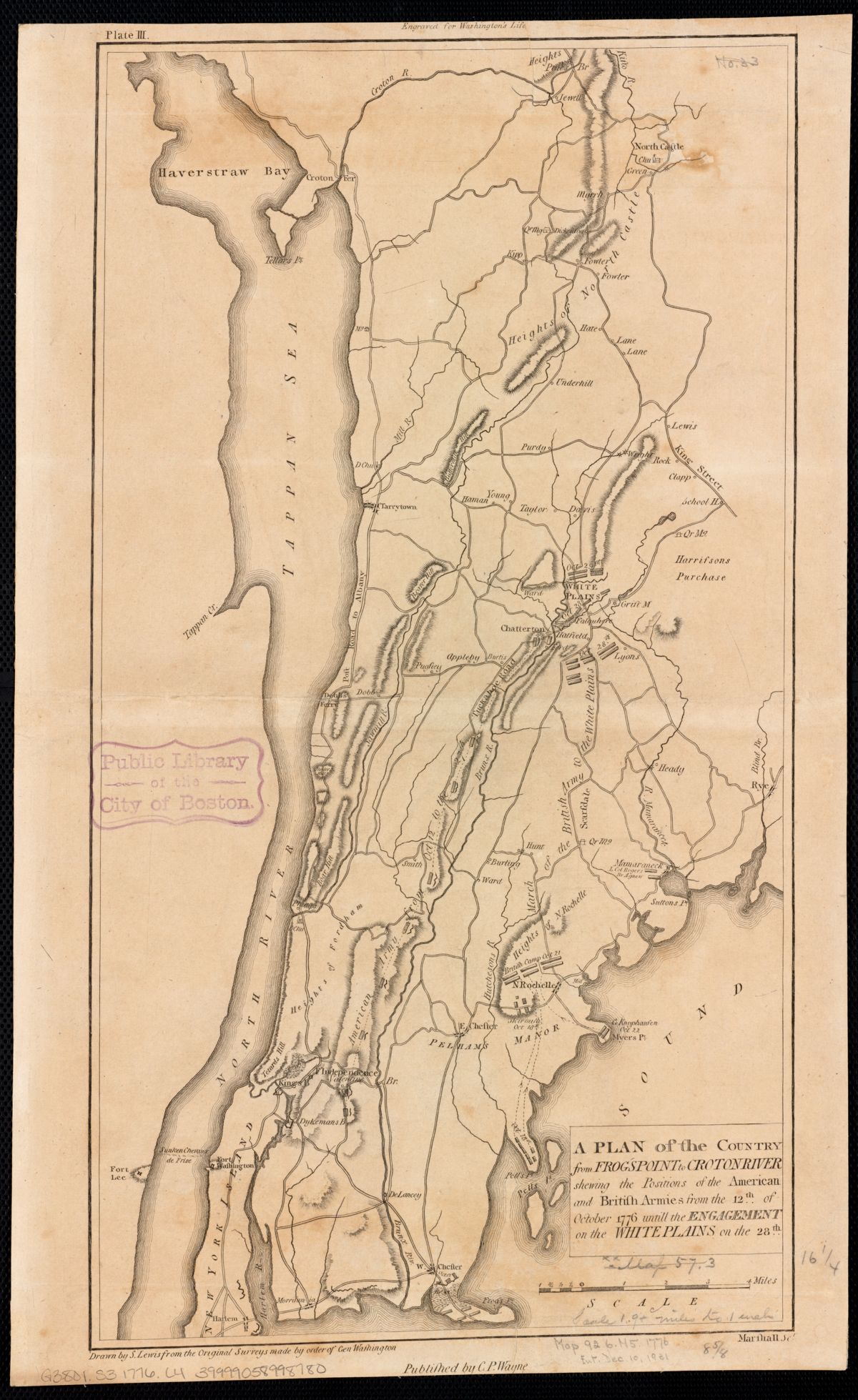
If you have heard of the Battle of Pines Bridge at all, you probably know it as a footnote to the biography of Colonel Christopher Greene, the Rhode Island Continental officer who led the 1st Rhode Island Regiment — the integrated Continental unit of formerly enslaved and Black free soldiers sometimes called the "Black Regiment" — from 1777 through 1781. Greene was the cousin of Nathanael Greene, and he had made his reputation defending Fort Mercer against a Hessian assault in October 1777, where his 400-man garrison killed nearly a thousand attackers. By the spring of 1781 he was stationed in northern Westchester County, commanding the American forward position on the south bank of the Croton River — the line that separated the American Neutral Ground from the Loyalist-held territory of lower Westchester and the Bronx. His headquarters was a large frame farmhouse built in 1773 by Richardson Davenport on a lane north of the Crompond road, about a mile and a half upstream of Pines Bridge.
On the morning of May 14, 1781, a detachment of DeLancey's Refugees — the Loyalist cavalry corps commanded by Col. James DeLancey of Morrisania — crossed the Croton under cover of darkness and attacked the Davenport House. Greene and his second-in-command, Major Ebenezer Flagg, were killed. So were an unknown number of soldiers of the Rhode Island Black Regiment. DeLancey's force then retreated across Pines Bridge and south toward their own lines. Greene was buried, uncelebrated and unmarked, in the Crompond churchyard.
That is approximately the outline you will find in Bolton 1848, Scharf 1886, Shonnard 1900, and in every subsequent secondary account. What has been almost entirely missing from the published record is any first-person testimony from inside the house, any description of how the attack was carried out, any motive for the targeting of the Black troops, any specific named Refugee involved, any detail of how Greene himself died, and any documentary evidence for what Washington and DeLancey were actually trying to do at that moment of the war.
All of those elements exist in the 1844–1851 McDonald Interviews. None of them were transcribed from the manuscript page images until April 2026, when this history.croton.news project ran the Westchester County Historical Society's digitized McDonald collection through Google's Gemini vision model. This article is the first attempt we are aware of to consolidate the McDonald Pines Bridge testimony into a single primary-source reconstruction.
Seven Witnesses
Across the ~109 McDonald interviews we have transcribed so far, seven preserve substantial testimony about the events of May 14, 1781. We list them in the order they came to McDonald:
| Date | Witness | Relationship to events | WCHS item | |---|---|---|---| | 1845-09-30 | Jackson Odell | Second-generation; preserves captured-paper tradition | [1469](https://collections.westchestergov.com/digital/collection/mcdonald/id/1469) | | 1845-10-06 | Thomas Strang (1763–1851) | Father Henry Strang commanded the patrol that found Greene's body | [380](https://collections.westchestergov.com/digital/collection/mcdonald/id/380) | | 1845-11-01 | Joshua Carpenter (1787–1873) | Owner of the Davenport House in 1845; shows McDonald the bullet holes | [1103](https://collections.westchestergov.com/digital/collection/mcdonald/id/1103) | | 1847-11-18 | James Wood | Records the second-site attack at the Widow Griffin's | [1372](https://collections.westchestergov.com/digital/collection/mcdonald/id/1372) | | 1847-11-17/18 | James Lyon & James Sutton | Eyewitness to the destruction of the Black picket at Pines Bridge | [1376](https://collections.westchestergov.com/digital/collection/mcdonald/id/1376) | | 1847-11-19 | Lydia Vail (b.c.1772) | Granddaughter of Richardson Davenport; ran to Davenport House from half a mile away the morning of the attack | [1353](https://collections.westchestergov.com/digital/collection/mcdonald/id/1353) | | 1848 | Abraham Weeks | Preserves Captain Gilbert Totten's quoted threat before the attack | [1288](https://collections.westchestergov.com/digital/collection/mcdonald/id/1288) | | 1848 | Joshua Putney | Names "Akerly" as the Refugee who first broke into Davenport House | [717](https://collections.westchestergov.com/digital/collection/mcdonald/id/717) |
Samuel Chadeayne, interviewed by McDonald in 1845 at Yorktown, also gives relevant testimony on DeLancey's approach route (WCHS item 1169), and Benjamin Kipp's November 1847 solo interview (WCHS item 666) adds tactical context. Eight named witnesses in total. Read together — not as separate paragraphs in separate books, but as a single evidentiary record — they tell a story the published histories have never told.
The Preamble: Washington's Order to "Take DeLancey at All Events"
The published histories frame the Pines Bridge attack as a successful opportunistic raid by a Loyalist cavalry colonel against a forward American outpost. In the primary-source record it is something else: a preemptive defensive strike by DeLancey to prevent his own capture or killing, ordered by George Washington, and known to DeLancey through the Refugees' spy network.
Jackson Odell, interviewed by John M. McDonald on September 30, 1845, preserves the specific sentence Washington wrote to Greene in the weeks or days before the attack. Odell's own words:[^1]
<em>"Among the papers which DeLancey found at Colonel Greene's quarters on the 13th of May 1781… It was a letter from General Washington to Colonel Greene, in which this expression was used, 'Take DeLancey at all events.' DeLancey said he was informed of this by his spies and determined to strike the first blow."</em>
[^1]: WCHS McDonald Interviews item 1469, Odell Jackson interview of September 30, 1845. Hufeland Mss. Book 1, Vol. 3, pp. 1460–1468. Digital record: https://collections.westchestergov.com/digital/collection/mcdonald/id/1469 . Transcribed from the WCHS manuscript page images via Google Gemini 2.5 Pro in April 2026.
The letter Odell describes — Washington's direct order to Greene to "take DeLancey at all events" — is recovered by DeLancey's men from Greene's papers after the attack, on May 13 or 14. DeLancey, Odell says, had learned of the order through his own spies, and his May 14 morning attack is therefore not a raid for plunder but a preemptive strike against an American operation that had been specifically designed to neutralize him. This is the strategic frame Bolton 1848, Scharf 1886, and Shonnard 1900 do not have. The Washington letter itself is presumably in the DeLancey captured-papers archive — wherever that archive now resides — and is, so far as we know, not cited by any modern historian of the Westchester Neutral Ground.
The Motive: Gilbert Totten, Under Guard, Spoken Threat
Captain Gilbert Totten of DeLancey's Refugees was, in the published sources, a middling Loyalist cavalry officer. The McDonald collection turns him into something more specific. At some point in the days or weeks before May 14, 1781, Totten had been captured by Greene's forces and placed under the personal guard of Rhode Island Black Regiment soldiers at Pines Bridge. At his release or parting, Totten spoke a quoted threat that Abraham Weeks preserved in his 1848 interview:[^2]
<em>"When Totten was insulted at Pines Bridge just before the capture of Davenports House, he said at parting to the officer who commanded the guard: 'When I come up again it will be with a red flag, and after that that niggers will be scarce!' The Negro troops then lay near Pines-Bridge at Widow Griffen's and Mr. Montross's &c."</em>
[^2]: WCHS McDonald Interviews item 1288, Weeks Abraham interview of 1848. Hufeland Mss. Book 1. Digital record: https://collections.westchestergov.com/digital/collection/mcdonald/id/1288 . Full transcription: https://history.croton.news/mcdonald/mcdonald_weeks_abraham .
"A red flag" in 1781 military convention meant no quarter — the colour signaled to the enemy that the attacking side would not accept surrender and would not take prisoners. Totten is not speaking generally. He is naming a specific outcome: when he returns, under a no-quarter signal, his specific target will be Black soldiers. The period spelling of the racial slur is Weeks's — preserved verbatim in McDonald's manuscript from an old man's direct quotation of what Totten had said three-quarters of a lifetime earlier. Weeks also places the two specific sites where the Rhode Island Black Regiment was quartered in May 1781: Widow Griffen's and Mr. Montross's, both near Pines Bridge.
This is the missing motive clause in the published Pines Bridge narrative. Totten's quoted threat, recovered seventy years later by a period eyewitness, explains the subsequent behaviour of the Refugee attack parties with grim precision.
Two Fords, One Morning
DeLancey divided his force. Joshua Carpenter — who in 1845 was the owner of the Davenport House and walked McDonald through the rooms in which the attack happened — is specific about the crossing point used by the detachment that attacked the house:[^3]
<em>"The Davenport House where I live is about one mile from Blenis's ford, about two and a half miles from Pines Bridge by the road… A party of DeLancey's Refugees (under Kipp I believe) crossed the Croton at Blenis's ford and got to the house unperceived."</em>
[^3]: WCHS McDonald Interviews item 1103, Carpenter Joshua interview of November 1, 1845. Hufeland Mss. Book 1, Vol. 2, pp. 1096–1102. Digital record: https://collections.westchestergov.com/digital/collection/mcdonald/id/1103 . Full transcription: https://history.croton.news/mcdonald/mcdonald_carpenter_joshua .
"Blenis's Ford" is a Croton River crossing point that has dropped out of the published place-name record. Carpenter locates it "about a mile and a half below Pines Bridge" — downstream of the main crossing — and his 1845 testimony is the only reference to Blenis's Ford we have been able to find in our corpus. The ford is now submerged by the New Croton Reservoir.
A second detachment of Refugees took up a position near Pines Bridge itself and waited. James Wood's 1847 testimony captures the tactical detail:[^4]
<em>"When Colonel Green was killed part of the Refugees advanced to the Bridge, after waiting 'till the planks were laid which were taken up every night and replaced in the morning. They then attacked the widow Griffen's about a quarter of a mile off."</em>
[^4]: WCHS McDonald Interviews item 1372, Wood James interview of November 18, 1847. Hufeland Mss. Book 1, Vol. 4, pp. 1365–1371. Digital record: https://collections.westchestergov.com/digital/collection/mcdonald/id/1372 . Full transcription: https://history.croton.news/mcdonald/mcdonald_wood_james .
The detail that the planks of Pines Bridge were "taken up every night and replaced in the morning" is an American security protocol: the bridge was disassembled at dusk to prevent Loyalist cavalry from crossing unexpectedly, and reassembled at dawn to allow normal American traffic. DeLancey's second detachment waited at the Croton on the north bank, timing their attack to the exact moment the American soldiers were replacing the planks on their own bridge. The moment the bridge was passable, the Refugees rode onto it, killed or routed the replacement crew, and then attacked the Widow Griffin's house a quarter-mile away where the Black Regiment's main camp was quartered.
Meanwhile, up at Davenport House, the first detachment — under an officer Carpenter tentatively identifies as "Kipp" — had already reached the farmhouse by going around through Blenis's Ford.
Inside the House: Joshua Carpenter's Walk-Through
In 1845, when McDonald sat down with Joshua Carpenter at Davenport House, Carpenter led him through the actual rooms of the attack. He was 58 years old and he had owned the house for some years. The rooms where Greene and Flagg died were the same rooms they had died in, sixty-four years earlier, and Carpenter could still show the bullet holes in the doors and the panel work. His own words:[^3]
<em>"The following are the particulars of Greene's disaster, as I have heard them from my ancestors at various times, and particularly from my grandfather who lived here at the time… They came up on the West side of the house where only a single sentinel was posted and who did not see them till they were near him, but who then fired. Some soldiers lying down and sleeping on the stoop (South side of the house) also fired. Greene and Flagg both sprang up. The former encouraged the soldiers to defend themselves, saying: 'They are only a few cow boys. — Fire away, boys, fire!' Flagg advanced at the same time to the west window with a pistol in each hand and fired out upon the enemy. He was answered by a volley and fell dead pierced by several balls. The Refugees at the same time burst open the north door and fired in, thus making a cross fire, You see five or six bullet holes yet remaining in the doors and pannel work."</em>
Stop on that last sentence. You see five or six bullet holes yet remaining in the doors and pannel work. Carpenter is pointing at them as he speaks. In May of 1845 the bullet holes from the attack of May 14, 1781 are still physically present in the doors of the Davenport House. Carpenter could point them out. McDonald wrote it down. Sixty-four years of scrubbing, painting, and carpentry had not yet closed those holes. The Davenport House — still standing — preserved the physical evidence of Flagg's last moment.
Greene's Last Words, Greene's Last Minutes
The most quoted lines in the entire Pines Bridge primary-source record belong to Colonel Christopher Greene himself, recorded by Joshua Carpenter from his grandfather's direct witness:[^3]
<em>"Greene, a large powerful man, met the enemy at the north door and attempted to defend it sword in hand. He struck at Totten, who was foremost, with all his might and would have killed him on the spot had not the blow been parried by one of the Refugees. As it was Totten was stunned and wounded. Greene in the conflict received several shots and was lamentably cut and hacked with the sabre. He then asked for quarter and it was granted — then for his parole which was refused. They told him he must go with them to Morrisania, and mounted him behind a dragoon for about a mile and a half or more, and then fell off where you descend a hill a little north west of the Widow Griffen's. Finding that he was dying they did not attempt a farther removal, but left him by the road side with his head upon a bank of earth."</em>
Four new details emerge:
1. Greene met the Refugees at the north door with his sword drawn. He is not killed in his bed. He is not shot through a window. He fights the attack hand-to-hand at the north door of his own house. 2. Greene wounded Gilbert Totten first — and would have killed him — if another Refugee had not parried the blow. Totten, the man whose quoted threat a week earlier predicted no-quarter for Black soldiers, is personally wounded at Davenport House by Colonel Greene's sword. The wound is severe enough to stun Totten. It is, in Carpenter's phrasing, the blow that "would have killed him on the spot." 3. Greene asked for quarter, and it was granted. He then asked for his parole — the standard officer's privilege of being released on his word of honor not to fight again — and it was refused. He was then told he would be taken to Morrisania (DeLancey's headquarters) alive. 4. Greene died on the road, carried behind a dragoon. He was mounted behind a Refugee horseman, bled for a mile and a half as they rode south, and fell off a hill "a little north west of the Widow Griffen's." He was laid by the side of the road with his head on a bank of earth. The Refugees left him to die. He was found later by the American patrol commanded by Thomas Strang's father, Captain Henry Strang.[^5]
[^5]: Strang Thomas, WCHS McDonald Interviews item 380, interview of October 6, 1845. Hufeland Mss. Book 1, Vol. 1. Digital record: https://collections.westchestergov.com/digital/collection/mcdonald/id/380 . Strang's explicit statement: Greene "was soon afterwards found, by a patrol commanded by my father, Captain Henry Strang being then quite dead."
Greene did not die instantly. He died slowly, from blood loss, on a bank of earth by a road, after asking for and being denied parole. His death is a protracted abandonment, not a battlefield killing.
The Other Witnesses at the House
Lydia Vail, Davenport's granddaughter, lived half a mile north of the Davenport House on the Crompond road.[^6] She was nine years old on the day of the attack (she was "about 74" when McDonald interviewed her in November 1847, implying a birth year around 1773). She ran with her family "through the fields to Davenports house" as soon as word came that "they were all cut off and killed at Head quarters." She arrived shortly after sunrise — the Refugees were still retreating through the nearby woods. Her account of the inside of the house disagrees with Carpenter's in one important way, and agrees with it in several others.
[^6]: WCHS McDonald Interviews item 1353, Vail Lydia interview of November 19, 1847. Hufeland Mss. Book 1, Vol. 5, pp. 1347–1352. Digital record: https://collections.westchestergov.com/digital/collection/mcdonald/id/1353 . Full transcription: https://history.croton.news/mcdonald/mcdonald_vail_lydia .
Vail's account of the attack:[^6]
<em>"They, the Refugees, came on suddenly and called upon the soldiers to surrender, but a young Captain or Lieutenant opened the window and discharged two pistols at the enemy, first one and then the other. Then the Refugees were much excited, and cried out aloud: 'Kill all the d__d Rebels!' 'You have undone us!' said Flagg to the young Captain, 'and we must now sell our lives as dearly as we can.' And as they stood in the window a volley was fired which killed them both. The bed room contained three beds being large; and Greene, Flagg and the young Captain all slept there. The three were afterwards interred together in the same grave at Crompond."</em>
Vail's version introduces a fourth person: the young captain or lieutenant whose pistol shots provoked the Refugee volley. She records Flagg's exact response to him — "You have undone us… and we must now sell our lives as dearly as we can." — one of the most dramatic lines in any American Revolutionary primary source. And she says Greene, Flagg, and the young captain all died at the window, from a single volley, all buried in the same grave at Crompond.
Vail's account and Carpenter's account agree on several facts — three officers slept in one bedroom, the bullet-hole remnant, the pre-dawn timing. They disagree sharply on how and where Greene died. Carpenter has Greene at the north door with a sword, wounded at close range, carried off alive, dying on the road. Vail has Greene at the west window, killed by the same volley that killed Flagg and the unnamed young captain, buried in a common grave at Crompond.
We cannot reconcile the two accounts fully. Carpenter — whose testimony comes from his grandfather Richardson Davenport, who lived in the house, was present the morning of the attack, and physically fled to the scene as soon as the Refugees rode off — has the more detailed and internally coherent narrative. His mention of the "bullet holes yet remaining" is physical evidence in 1845 that the combat at the door actually happened as he describes it. Vail's testimony, by contrast, is from a nine-year-old who ran to the scene afterward and carries a compressed family tradition from her grandfather about what had just been found. She may be conflating the west-window killing of Flagg and the young captain with Greene's separate wounding at the door. The "same grave" detail is contradicted by Carpenter's statement that Greene fell off the horse a mile and a half from the house — meaning Greene's body was not recovered at the house but on the road, and was later buried separately.
The best current reconstruction, we think, honors Carpenter on Greene's death and Vail on the young captain. Greene fought at the north door, wounded Totten, was hacked with sabres, asked for quarter, was denied parole, carried on horseback a mile and a half, and died on a roadside bank of earth. Flagg and an unnamed young captain advanced to the west window with pistols, fired out, were answered by a volley, and died in the window. All three were buried at Crompond — Flagg and the captain possibly together, Greene separately. The uninscribed rough stones marking the graves at Crompond are documented by Strang:[^5]
<em>"The Cols. Greene and Major Flagg, I think, are both interred in the Crompond burying ground. Without a monument or tombstone having any inscription. Plain rough stones designate their resting place."</em>
Who Was the Young Captain?
The identity of the young captain who fired the first pistols at the west window is not preserved in any of the McDonald interviews we have transcribed. Vail is the only witness who mentions him explicitly — Carpenter names only "Greene and Flagg" as sleeping "in the same bed," which is almost certainly a shortening of "in the same bedroom" and does not distinguish a third officer. Flagg's quoted line — "You have undone us!" — is spoken to the young captain, which means the young captain was still alive at that moment and was the direct recipient of the accusation.
The standard published accounts of Pines Bridge give a third casualty variously as "Lt. Col. Flagg" (confusing him with Major Flagg), "Major Flagg" (correct), or simply as "Greene's adjutant." We have not located a primary source that gives the young captain a first and last name. He is almost certainly a junior officer of the Rhode Island Regiment whose name was lost in the compression of the family tradition before McDonald reached Vail in 1847. His death at the west window, ordered — and mourned — by Flagg in the same breath, is one of the small lost details of the battle that deserves further search.
The Attack Goes On: The Widow Griffin's, The Picket, The Camp
While Greene and Flagg and the young captain were being killed inside the Davenport House, the second Refugee detachment was attacking the Rhode Island Black Regiment's camp. James Wood's 1847 testimony is the key source for this second-site atrocity:[^4]
<em>"When Colonel Green was killed part of the Refugees advanced to the Bridge, after waiting 'till the planks were laid which were taken up every night and replaced in the morning. They then attacked the widow Griffen's about a quarter of a mile off. Here the negroes were cut up unmercifully — Refugees very bitter against them on account of Captain Totten."</em>
Wood's testimony gives us the Widow Griffin's house — a specific private residence a quarter-mile from Pines Bridge where Black soldiers were quartered — and the explicit linkage of the atrocity at that house to Captain Totten's personal bitterness. The phrasing "cut up unmercifully" is specific: the Refugees used their swords, not muskets. This is the execution or massacre of troops already under attack, not an exchange of fire between picket lines.
James Lyon and James Sutton, interviewed together in November 1847, independently confirm the destruction of the Black picket at Pines Bridge itself — as distinct from the camp at the Widow Griffin's:[^7]
<em>"In May 1781, Pines Bridge was guarded by negroes, and they were attacked by the Refugees at the same time in the morning that Davenports house was surprised and taken. This negro guard was entirely cut to pieces, but by a different party from that which surprised Greene and Flagg."</em>
[^7]: WCHS McDonald Interviews item 1376, Lyon James and Sutton James interview of November 17 and 18, 1847. Hufeland Mss. Book 1. Digital record: https://collections.westchestergov.com/digital/collection/mcdonald/id/1376 . Full transcription: https://history.croton.news/mcdonald/mcdonald_lyon_james_and_sutton_james .
Lyon and Sutton explicitly say a different party attacked the picket from the one that attacked the house — confirming Wood's account of a coordinated two-detachment operation. And they use the phrase "entirely cut to pieces" — the Black Regiment's picket at the Bridge itself was destroyed as a unit.
Wood, Lyon, Sutton, and Weeks form a four-witness chain on the atrocity at Pines Bridge:
1. Weeks (1848): Totten's quoted threat "niggers will be scarce" — the motive. 2. Wood (1847): The Refugees attack the Widow Griffin's house a quarter-mile from the Bridge, where Black soldiers are quartered; they "cut up [the negroes] unmercifully" because of Totten. 3. Lyon & Sutton (1847): A second Refugee detachment attacks the Black picket at the Bridge itself at the same time; the picket is "entirely cut to pieces." 4. Weeks (again): The Black troops were camped at Widow Griffen's and Mr. Montross's — two named Whig houses near Pines Bridge.
Four independent witnesses. The Pines Bridge attack of May 14, 1781 was not a single engagement at the Davenport House. It was a coordinated two-site killing operation in which the Rhode Island Black Regiment was specifically targeted for destruction, and the motive was Totten's stated racial resentment at having been placed under Black guard before his exchange.
The Davenport Slaves
A separate category of Black casualty appears in Lydia Vail's testimony — not the Rhode Island Regiment, but her own grandfather's enslaved household. Vail's statement is carefully worded:[^6]
<em>"Two Negro servants of my father were wounded, one in the arm and the other in the shoulder… I think there were no negroes at Davenport house, but my grandfathers, when Greene was surprised."</em>
The phrasing matters. Vail is distinguishing her grandfather's two enslaved men — wounded but not killed, one shot in the arm, one in the shoulder — from whatever "negroes" might be associated with the Davenport House in some other sense. She is telling McDonald that the only Black men inside the Davenport House on the morning of the attack were Davenport's household slaves, not soldiers of the Rhode Island Regiment.
This is not a correction. It is a clarification. The Rhode Island Black Regiment's troops were a mile and a half away, at the Bridge and at the Widow Griffin's camp. The Davenport House's Black men were enslaved household staff, present because the Davenport family owned them. They were wounded in the shooting at the house but survived. Their names are not recorded in any source we have, and they are not counted in any published casualty list for Pines Bridge. Their wounds — one shot in the arm, one in the shoulder — are the only documented injuries to named individual Black men at the Davenport House that morning. They deserve to be in the record.
Joshua Putney Names a Refugee: Akerly
One of the smallest and most striking contributions in the entire Pines Bridge primary-source record comes from Joshua Putney, a man in his mid-80s interviewed by McDonald in 1848. Putney names a specific Refugee — a man never previously attached to the Pines Bridge attack in any published account — as the first man through the door at Davenport House:[^8]
<em>"When Davenport's house [was taken,] one Akerly broke in and entered first Colonel Green seized, threw him down, and was upon the point of despatching him with his sword when he received a cut in the arm which disabled him. Akerly was from near Pines Bridge."</em>
[^8]: WCHS McDonald Interviews item 717, Putney Joshua interview of 1848. Hufeland Mss. Book 1. Digital record: https://collections.westchestergov.com/digital/collection/mcdonald/id/717 .
Akerly, a Refugee from the Pines Bridge neighborhood itself, is named by Putney as the first man across the threshold of the Davenport House. Akerly seized Greene, threw him to the floor, and was on the point of killing him with his sword when Akerly himself received the cut to the arm that disabled him. The cut to Akerly's arm is almost certainly the blow that Carpenter's account attributes to Greene's sword at the north door — "Greene… struck at Totten, who was foremost, with all his might and would have killed him on the spot had not the blow been parried by one of the Refugees." In Carpenter's version, Totten is "foremost" and the parrying Refugee is unnamed. In Putney's version, the first man in is Akerly, and the disabling cut lands on Akerly's arm.
The two accounts can be reconciled: Akerly and Totten were both at the door, Akerly was first through, Akerly got Greene down and was about to kill him, Greene's sword-blow struck Akerly's arm and was then parried or continued to reach Totten. Or, alternatively: Akerly and Totten are the same person under two different names in different family traditions (Akerly is a common 19th-century Westchester surname; Totten is the more famous Loyalist name). We cannot adjudicate between the two readings. What we can say is that one of the two, or both, bears a Pines Bridge-neighborhood identity — "Akerly was from near Pines Bridge" — and the published histories have lost this local detail entirely.
The Night Before: Greene's Last Conversation
One of the most personal moments in the entire McDonald Pines Bridge record is preserved by Lydia Vail as a conversation she heard about from her grandfather Richardson Davenport. On the evening of May 13, 1781 — less than twelve hours before Greene would be killed — Greene spoke with Davenport at the dinner table:[^6]
<em>"The very night before this surprise Greene said to my grand-father: 'Mr. Davenport you are a happy man, surrounded by a fine wife and a dutiful family of children. I envy you much. But I hope this unnatural war is drawing to a close, and that by this time next Spring, I also shall enjoy Domestic happiness as you do with my wife and children.' Twelve hours had not elapsed after this before he was a dead man."</em>
This is the last documented sentence from Colonel Christopher Greene's own mouth. He is looking across the dinner table at his host, a civilian, watching the older man's wife and children, and saying that he hopes by next spring to be sitting at his own table with his own family. He has less than twelve hours left to live. Vail's phrase — "Twelve hours had not elapsed after this before he was a dead man" — is the compression of family tradition into a single bitter line.
Greene was 43 years old when he died. His wife was Anna (née Lippitt) Greene, whom he had married in 1757 at age 19. They had six children. He is buried in the Crompond Methodist Episcopal Church burial ground — now Saint Mary's Cemetery in Yorktown Heights — under an uninscribed rough stone.[^5]
What the Published Record Missed
The published histories of Pines Bridge — Bolton 1848, Scharf 1886, Shonnard 1900, and every subsequent secondary account we have been able to locate — describe the May 14, 1781 engagement as a surprise attack on the American headquarters at Davenport House in which Greene and Flagg were killed. They cite Greene's Rhode Island background, his Fort Mercer service, his family connection to Nathanael Greene, and his burial at Crompond. They do not preserve:
- Washington's strategic order to Greene to "take DeLancey at all events" — the preemption motive (Odell, WCHS 1469). - Totten's quoted threat at Pines Bridge that "niggers will be scarce" when he came up under a red flag — the atrocity motive (Weeks, WCHS 1288). - Blenis's Ford as the crossing point of the main Refugee detachment (Carpenter, WCHS 1103). - The plank-timing tactic used by the second Refugee detachment at Pines Bridge (Wood, WCHS 1372). - Akerly as the first Refugee through the door at Davenport House (Putney, WCHS 717). - Greene's quoted sentence to his men — "They are only a few cow boys. — Fire away, boys, fire!" — in his own voice (Carpenter, WCHS 1103). - Flagg's quoted sentence to the unnamed young captain — "You have undone us, and we must now sell our lives as dearly as we can." — in his own voice (Vail, WCHS 1353). - Greene's specific combat at the north door, his sword striking Totten or Akerly, his request for quarter, his denied parole, his long ride on horseback behind a dragoon, his fall from the horse on a hillside northwest of the Widow Griffin's, his death on a roadside bank of earth (Carpenter, WCHS 1103). - The second-site atrocity at the Widow Griffin's house a quarter-mile from the Bridge, where Black soldiers were quartered and "cut up unmercifully" (Wood, WCHS 1372). - The destruction of the Black picket at Pines Bridge itself by a separate Refugee detachment (Lyon & Sutton, WCHS 1376). - The wounding of two of Davenport's enslaved household men in the house itself — one shot in the arm, one in the shoulder (Vail, WCHS 1353). - Greene's last conversation the evening of May 13, 1781 with Richardson Davenport about how much he envied his host's family life (Vail, WCHS 1353). - The bullet holes still visible in the Davenport House doors and panel work in 1845, 64 years after the attack (Carpenter, WCHS 1103). - The uninscribed rough stones marking Greene's and Flagg's graves at Crompond (Strang, WCHS 380).
Every one of these is in the manuscript pages McDonald wrote between 1845 and 1848. None of them made it into the published histories. This article is the first attempt to consolidate them.
Coda: What the Reservoir Drowned
The ground where Colonel Christopher Greene died — on a bank of earth beside a road, a little northwest of the Widow Griffin's house, a mile and a half from the Davenport House — is now under the New Croton Reservoir. The reservoir was created between 1892 and 1907 by the dam at the head of the Croton Gorge, which flooded twenty square miles of the upper Croton valley to supply fresh water to New York City. The Davenport House site, Blenis's Ford, the Widow Griffin's, Pines Bridge itself (replaced by a later bridge further downstream), and the entire lane system along which Greene was carried on horseback are all in the flood zone.[^9]
[^9]: See [Story 13: Below the Dam](/story/13_croton_gorge_park) for the full account of the 1892–1907 dam construction, the strike of 1900, the 9/11 crest-road closure, and the 97-acre Croton Gorge Park that now occupies the downstream face of the dam. The Pines Bridge battlefield is upstream of the dam and therefore submerged by the reservoir; only the manuscript testimony and the uninscribed stones at Crompond remain.
The bodies from the flood zone were exhumed and reinterred on higher ground. Whether Greene and Flagg's remains were among them — moved from the Crompond burial ground in the late 19th century when the reservoir was filled — we have not been able to determine. The uninscribed rough stones Strang described in 1845 are not documented in any modern burial record we have located. Saint Mary's Cemetery in Yorktown Heights (the present name of the Crompond Methodist burial ground) may or may not still contain their graves.
The Rhode Island Black Regiment soldiers who died at the Widow Griffin's and at the Pines Bridge picket have no grave, no inscription, and no count. James Wood's "cut up unmercifully" and Lyon and Sutton's "entirely cut to pieces" are their entire historical monument.
The water of the reservoir sits over the ground now. Hikers walk above it. On the morning of May 14, 1781, before sunrise, the Davenport House was full of sleeping men. Greene had said at dinner the night before that he hoped to be with his own wife and children by next spring. Totten had said, some days earlier, that the next time he came up it would be under a red flag. Washington had written to Greene to take DeLancey at all events, and DeLancey's spies had read the letter.
When the planks were laid on Pines Bridge at dawn, the two Refugee detachments rode simultaneously across the Croton — one at Blenis's Ford and one at the Bridge itself — and began the morning's work.
Primary sources
The seven McDonald Interview witnesses
1. Carpenter, Joshua. Interview by John M. McDonald at the Davenport House, Yorktown, November 1, 1845. Westchester County Historical Society, McDonald Interviews item 1103. Hufeland Mss. Book 1, Vol. 2, pp. 1096–1102. Digitized manuscript: https://collections.westchestergov.com/digital/collection/mcdonald/id/1103 . Full transcription: https://history.croton.news/mcdonald/mcdonald_carpenter_joshua . Carpenter owned the Davenport House in 1845 and walked McDonald through the rooms of the attack, showing the bullet holes still visible in the doors and panel work. 2. Vail, Lydia. Interview by John M. McDonald, November 19, 1847. WCHS McDonald Interviews item 1353, Hufeland Mss. Book 1, Vol. 5, pp. 1347–1352. https://collections.westchestergov.com/digital/collection/mcdonald/id/1353 . Full transcription: https://history.croton.news/mcdonald/mcdonald_vail_lydia . Vail was Davenport's granddaughter; she was 74 in November 1847 and 9 years old the morning of the attack. She ran with her family from a house half a mile away as soon as word came. 3. Wood, James. Interview by John M. McDonald, November 18, 1847. WCHS McDonald Interviews item 1372, Hufeland Mss. Book 1, Vol. 4, pp. 1365–1371. https://collections.westchestergov.com/digital/collection/mcdonald/id/1372 . Full transcription: https://history.croton.news/mcdonald/mcdonald_wood_james . Wood's account is the primary source for the attack on the Widow Griffin's house and the racial motive attributed to Totten. 4. Lyon, James and Sutton, James. Joint interview by John M. McDonald, November 17 and 18, 1847. WCHS McDonald Interviews item 1376, Hufeland Mss. Book 1. https://collections.westchestergov.com/digital/collection/mcdonald/id/1376 . Full transcription: https://history.croton.news/mcdonald/mcdonald_lyon_james_and_sutton_james . Lyon and Sutton independently confirm the destruction of the Rhode Island Black Regiment's picket at Pines Bridge by "a different party" from the one that attacked Davenport House. 5. Weeks, Abraham. Interview by John M. McDonald, 1848. WCHS McDonald Interviews item 1288, Hufeland Mss. Book 1. https://collections.westchestergov.com/digital/collection/mcdonald/id/1288 . Full transcription: https://history.croton.news/mcdonald/mcdonald_weeks_abraham . Weeks preserves Captain Gilbert Totten's quoted threat at Pines Bridge before the attack — the single most important sentence in the whole primary-source record for the motive. 6. Putney, Joshua. Interview by John M. McDonald, 1848. WCHS McDonald Interviews item 717, Hufeland Mss. Book 1. https://collections.westchestergov.com/digital/collection/mcdonald/id/717 . Full transcription: https://history.croton.news/mcdonald/mcdonald_putney_joshua . Putney names Akerly as the first Refugee through the door at Davenport House and gives Akerly a local origin ("near Pines Bridge"). 7. Odell, Jackson. Interview by John M. McDonald, September 30, 1845. WCHS McDonald Interviews item 1469, Hufeland Mss. Book 1, Vol. 3, pp. 1460–1468. https://collections.westchestergov.com/digital/collection/mcdonald/id/1469 . Full transcription: https://history.croton.news/mcdonald/mcdonald_odell_jackson . Odell preserves the captured-letter tradition: Washington's "Take DeLancey at all events" order to Greene, recovered by DeLancey from Greene's papers after the attack. 8. Strang, Thomas. Interview by John M. McDonald, October 6, 1845. WCHS McDonald Interviews item 380, Hufeland Mss. Book 1, Vol. 1. https://collections.westchestergov.com/digital/collection/mcdonald/id/380 . Full transcription: https://history.croton.news/mcdonald/mcdonald_strang_thomas . Strang's father Captain Henry Strang commanded the American patrol that found Greene's body. Strang also documents the uninscribed rough stones marking the Crompond graves.
Supporting McDonald interviews
- Chadeayne, Samuel. WCHS McDonald Interviews item 1169, interview of 1845. Chadeayne's account of DeLancey's route of approach to Davenport House appears in our Original Research entry #4 (on Chadeayne's detail about the widow Budd's house and the French army encampment near the Davenport property). https://collections.westchestergov.com/digital/collection/mcdonald/id/1169 . - Kipp, Benjamin. WCHS McDonald Interviews item 666, solo interview of November 20, 1847. Kipp's account is primarily about the Andrew Irving cow story and the Skinners, not Pines Bridge directly, but he preserves the date of the Crompond burning raid and corroborating context on the Refugee-American raiding pattern of 1781. https://collections.westchestergov.com/digital/collection/mcdonald/id/666 .
Secondary sources and context
- Bolton, Robert Jr. A History of the County of Westchester (2 vols., 1848). The standard 19th-century account; silent on the specific details recovered here. - Scharf, J. Thomas. History of Westchester County, New York (2 vols., 1886). Treats the battle as a surprise attack on Greene's headquarters without first-person testimony. - Shonnard, Frederic, and W. W. Spooner. History of Westchester County, New York (1900). Inherits Scharf's outline; adds nothing on atrocity or motive. - Croton Friends of History blog, "Pines Bridge." Archived in our history.db. Treats the battle as a conventional Revolutionary engagement. - Westchester County Historical Society catalog, McDonald Interviews digital collection (launched April 2025): https://collections.westchestergov.com/digital/collection/mcdonald . The source we used to retrieve page facsimiles for all eight primary-source transcriptions.
A note on method
All quoted passages in this article are drawn from the McDonald Interview manuscripts as transcribed by Google's Gemini 2.5 Pro and Gemini 3 Pro Preview vision models between April 12 and April 13, 2026, with each quoted passage verified against the page facsimile by manual comparison. Interpretive conclusions (the "two-incident" framing of the Tea Captain article is analogous here for the two-site framing of the Pines Bridge attack) are our own and are marked as such. The primary-source disagreements between Carpenter and Vail on Greene's manner of death are preserved in the article rather than resolved — we think the primary-source record is more honest when its internal contradictions are visible than when they are edited out.
If you believe any claim in this article is wrong, please tell us. We would rather be corrected than be stale.
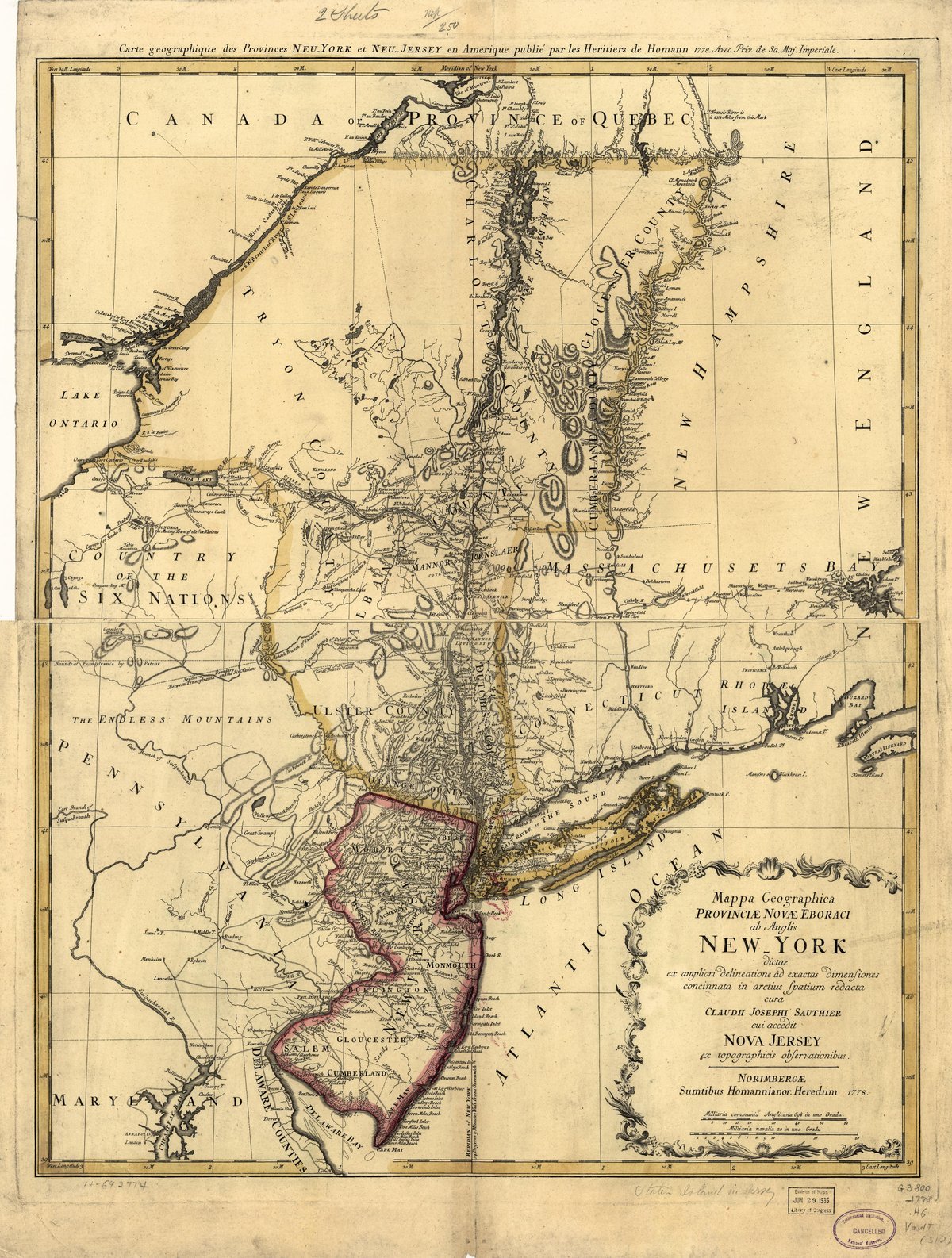
Photo3: loc_erskine_westchester_1778-1780.jpg — Robert Erskine's 1778–1780 surveyor's map of Westchester, the most detailed period map of the road and ford network around Pines Bridge. Library of Congress, public domain.