A Company at Breakfast
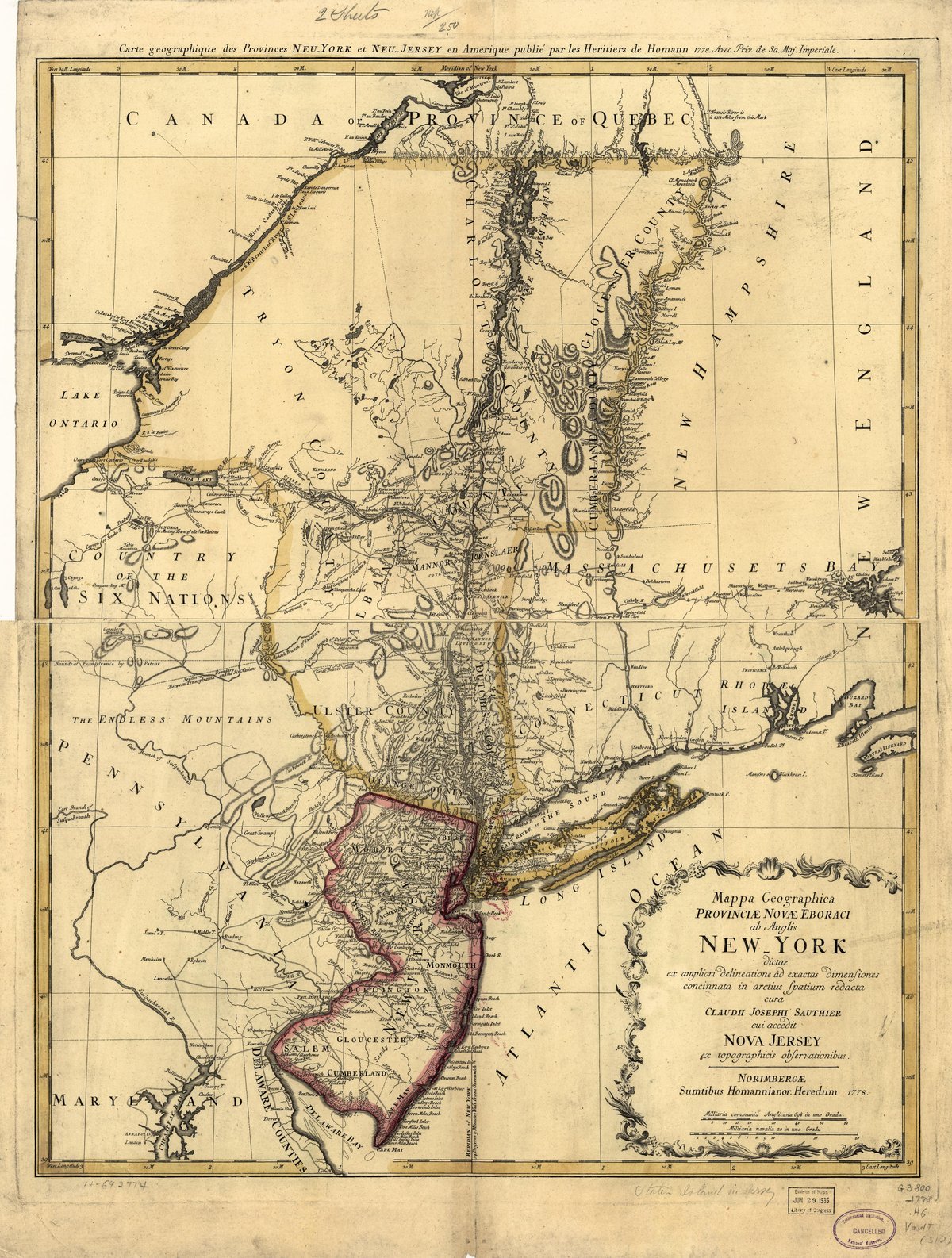
Mosier's Fight is one of the small engagements of the American Revolution in Westchester County that occasionally appears in published histories as "a creditable militia action." The usual version: on December 2, 1781 — nearly two months after Cornwallis's surrender at Yorktown — Lieutenant William Mosier, commanding a small company of Westchester militia, was attacked by a much larger force of Col. James DeLancey's Refugees near the present Purchase/Harrison border. Mosier's men held their ground and repelled multiple cavalry charges. Washington later praised the conduct of the militia with the phrase "skill and gallantry." Mosier is remembered in Westchester as a forgotten local hero of the closing weeks of the war.
That is the shape of the published story. The actual details — where Mosier's company was standing when the alarm sounded, how they formed up, what weapons the Refugees carried, who talked Captain Kipp out of a final charge, how long the fight lasted, who got the credit afterward, and who actually died — exist in the McDonald Interviews and nowhere else.
In April 2026, as part of the history.croton.news project, we transcribed the handwritten McDonald manuscript pages in which nine different witnesses independently describe the engagement. Mosier's Fight turns out to be the most densely witnessed small-unit action in the entire McDonald collection. The witnesses do not agree on everything. But read together, they produce a ground-level reconstruction of the kind that published histories almost never have for a minor militia engagement.
Nine Witnesses
| Date | Witness | WCHS item | Relationship to events | |---|---|---|---| | 1844-10-12/14 | Samuel Oakley | [1790](https://collections.westchestergov.com/digital/collection/mcdonald/id/1790) | Tactical account of Kipp's approach | | 1844-10-19 | Lott Merritt | [206](https://collections.westchestergov.com/digital/collection/mcdonald/id/206) | Attributes credit to Sgt. Slater/Slaughter | | 1845 | Jacob Odell | [1937](https://collections.westchestergov.com/digital/collection/mcdonald/id/1937) | Militia brigadier; preserves the Black soldier and shaving-razor details | | 1845-12 | Robert Miller | [472](https://collections.westchestergov.com/digital/collection/mcdonald/id/472) | Eyewitness to Samuel Kipp's behavior after the defeat | | 1848 | James Hopkins | [1685](https://collections.westchestergov.com/digital/collection/mcdonald/id/1685) | Preserves the Loyalist command-tent dialogue via Refugee Steven Hunt | | 1848-11 | David Higgins | [872](https://collections.westchestergov.com/digital/collection/mcdonald/id/872) | Uncle John Chatterton lost an arm in the fight | | 1848-12-01 | Jeremiah Anderson | [1570](https://collections.westchestergov.com/digital/collection/mcdonald/id/1570) | Detailed tactical account — the shaving, the square, the charges | | 1849-11-06 | Hannah Mabie Miller | [1141](https://collections.westchestergov.com/digital/collection/mcdonald/id/1141) | Post-victory dinner at Bedford | | 1850-10 | Prince Gedney | [1977](https://collections.westchestergov.com/digital/collection/mcdonald/id/1977) | Names Peter Angevine, a Refugee casualty, from Fox Meadow |
Every quotation below is preserved in our transcriptions at [history.croton.news/mcdonald](https://history.croton.news/mcdonald) and is drawn directly from WCHS manuscript page images.
The Alarm at Henry Dusenbury's
Jeremiah Anderson's 1848 account is the most detailed single source for the opening moments of the fight. Mosier's company was at the old house of Henry Dusenbury when the alarm came. Anderson's words:[^1]
<em>"Mosier was at the old house of Henry Dusenbury in the fields which is yet standing and his Company were around the house. Master Samuel Haight was shaving him. On the alarm he jumped up, took his gun and marched down the lane which then went all the way to Blind Brook. Kipp also went east by the road intending to cut them off. They were within sight of each other at times."</em>
[^1]: WCHS McDonald Interviews item 1570, Anderson Jeremiah interview of December 1, 1848. Hufeland Mss. Book 1, Vol. 5, pp. 1551–1569. https://collections.westchestergov.com/digital/collection/mcdonald/id/1570 . Full transcription: [history.croton.news/mcdonald/mcdonald_anderson_jeremiah](https://history.croton.news/mcdonald/mcdonald_anderson_jeremiah).
Three specific facts land in this one sentence. First, Mosier was being shaved by a civilian named Master Samuel Haight when the alarm sounded. The detail of being half-shaved does not survive as rhetorical flourish — Anderson preserves it because his informant found it memorable that Mosier simply stood up from the chair, picked up his gun, and marched. Second, the old Henry Dusenbury house is named as the camp — still standing in 1848 when Anderson gave the interview. Third, the lane Mosier took ran "all the way to Blind Brook" — a specific geographic vector from the Dusenbury house south and east to the Brook.
Samuel Oakley's 1844 testimony, given four years earlier than Anderson's, uses a slightly different location for the shaving-and-breakfast camp and names a different host:[^2]
<em>"When Kipp overtook Mosier he was at Breakfast at a house (Treadwell's?) with his company. One or two of the soldiers made their escape across the fields. Thirty two remained with him and retreated. The affair took place near General Thomas's, between the Purchase road and King street near Treadwell's."</em>
[^2]: WCHS McDonald Interviews item 1790, Oakley Samuel interview of October 12 and 14, 1844. Hufeland Mss. Book 1. https://collections.westchestergov.com/digital/collection/mcdonald/id/1790 . Full transcription: [history.croton.news/mcdonald/mcdonald_oakley_samuel](https://history.croton.news/mcdonald/mcdonald_oakley_samuel).
Oakley locates the camp at "Treadwell's" — marked with his own query "(Treadwell's?)" — and places the engagement "between the Purchase road and King street near Treadwell's," in the vicinity of General Thomas Thomas's estate in modern Harrison/Purchase. Anderson places the camp at "Dusenbury's" in the same general area. The two names — Dusenbury and Treadwell — may refer to two adjacent properties, or to the same house under two family-memory names, or to a starting camp and a secondary position. Oakley also gives a unit strength of 32 men who stayed with Mosier after one or two had broken away across the fields. This is the only primary-source number we have for Mosier's company on the morning of the fight.
Brig. Gen. Jacob Odell, the Westchester militia general whose WCHS item 1937 appears earlier in the McDonald file order, gives the same shaving-razor detail from a slightly different angle:[^3]
<em>"[Mosier was shaving when the news came. He laid his razor down very coolly and marched his men to meet the enemy. He then retreated to the woods.]"</em>
[^3]: WCHS McDonald Interviews item 1937, Odell Jacob interview. Jacob Odell (1756–1845) served in the Westchester County Militia and rose to brigadier general in the New York State Militia after the war. https://collections.westchestergov.com/digital/collection/mcdonald/id/1937 . Full transcription: [history.croton.news/mcdonald/mcdonald_odell_jacob](https://history.croton.news/mcdonald/mcdonald_odell_jacob).
Two independent witnesses — Anderson and Odell — separately preserve the razor detail. Odell adds the one-word assessment, coolly. Mosier stood up, set the razor down, and walked out. The alarm had apparently given him time to form his men in good order before Captain Samuel Kipp's cavalry came over the hill.
The Hollow Square at Blind Brook
Anderson's account of the actual combat is the fullest single description of the engagement:[^1]
<em>"After crossing Blind Brook the Refugees threw down the upper rail jumped their horses over the fence and rode towards Mosier who was waiting for them in the middle of the field and who had drawn up his men in a square or circle. The field is about a mile and a half from Henry Dusenbury's house. The Refugees came up a number of times and charged before they fired their pistols, but the horses being pricked reared and made no impression. At length they charged again, and one Strang fired his pistol, and he was instantly shot dead by Mosier's orders."</em>
Three new details:
1. Mosier formed his company into a hollow square (or circle — Anderson's phrase is "a square or circle"). This is a classic defensive formation against cavalry — the men face outward in a closed ring, presenting a wall of bayonets that horses refuse to charge into. That Mosier, a junior militia officer with 32 men, knew to form a square and had drilled his men well enough to execute one, is itself a tactical fact the published accounts do not preserve. 2. The field was a mile and a half from the Dusenbury house — Anderson gives a specific distance, confirming the Dusenbury farmhouse and the engagement site as two separate locations. 3. The Refugee charges failed because the horses "pricked" and reared when they came up against the square. The Refugees tried to break the formation multiple times by charging and firing pistols. The horses would not close. One Refugee, named Strang, fired his pistol and was shot dead by Mosier's direct order.
Anderson continues with a striking exchange from the Refugee side:[^1]
<em>"After failing in all their charges Major Hungerford told me that Captain Kipp informed him that they had a consultation and one of the officers proposed they should approach once more, fire their pistols and immediately throw them at Mosier's men with the view of breaking their ranks; but either Kipp or Holmes (probably Holmes) opposed this saying that he knew Mosier well and that the ranks of his men could not be broken."</em>
This is second-hand testimony — Anderson heard it from Major Thomas Huggeford (Anderson's spelling "Hungerford"), who in turn had heard it directly from Captain Samuel Kipp at some point after the war. The detail preserved is a whispered Refugee officers' consultation in the middle of the fight: one of the Loyalist officers proposed to charge a third time, fire pistols at close range, and then throw the empty pistols at Mosier's men in the hope of breaking the formation. Either Kipp or Holmes — Anderson thinks Holmes — objected, saying "he knew Mosier well and that the ranks of his men could not be broken." The line is a direct personal recognition from a Loyalist captain of his American opponent's reputation.
A Command-Tent Quote from the Loyalist Side
The single richest piece of Mosier's Fight testimony is James Hopkins's interview (WCHS 1685), which preserves a different, independent piece of Loyalist command-tent dialogue.[^4] Hopkins, a North Castle resident, got the line from a former Refugee named Steven Hunt after the war:

<em>"Steven Hunt [said] 'You see they are determined men, and most of you are married, and our loss will be too great.'"</em>
[^4]: WCHS McDonald Interviews item 1685, Hopkins James interview of November 10, 1848. Hufeland Mss. Book 1. https://collections.westchestergov.com/digital/collection/mcdonald/id/1685 . Full transcription: [history.croton.news/mcdonald/mcdonald_hopkins_james](https://history.croton.news/mcdonald/mcdonald_hopkins_james).
This is a literal line of dialogue spoken inside the Loyalist command tent during the fight, from one Refugee officer to his men. The officer — Hopkins attributes it to Col. James Holmes — is making the argument against a further charge: the Americans are determined, most of us have wives and families, and we will lose too many men if we keep trying to break that square. It is the exact argument that, per Anderson's separately-recorded account, Kipp and Holmes used to talk their junior officers out of the throw-the-pistols-at-them charge. Two independent McDonald witnesses, interviewed three years apart, preserve the same Loyalist-side reasoning in almost the same words. The line is the single best-attested piece of Loyalist-side dialogue in the whole McDonald collection.
The Black Soldier at Mosier's Side
Brigadier General Jacob Odell's account — recorded earlier in the McDonald project and already preserved in the Original Research page — singles out a named but unrecorded category of participant:[^3]
<em>"[A Black soldier, a servant to Capt. Sackett, fought with great bravery at the fight.]"</em>
Odell, a militia commander himself, records the bravery of a Black man attached to Captain Sackett's household — almost certainly enslaved or formerly enslaved, identified only as "a servant" — who stood in the line with Mosier's militia and fought with sufficient distinction that Odell remembered him 64 years later. The man's name is not preserved. Odell's interview is the only place in any primary or secondary source on Mosier's Fight where a Black combatant on the American side is mentioned at all.
For the story of Black service at Mosier's Fight and elsewhere in the Westchester militia, see Story 7, [Slavery at the Patriots' Manor](/story/07_slavery_patriots_manor).
Who Died at the Fight
On the Refugee side, the only clearly named casualty is Strang, killed by Mosier's direct order after firing his pistol (Anderson, WCHS 1570). Two other named Refugees are documented as wounded but surviving:
Peter Angevine, from Fox Meadow (modern Scarsdale), had his right arm broken by a shot during the fight. Prince Gedney's 1850 testimony:[^5]
<em>"Peter Angevine, a Refugee, originally from Fox Meadow had his right (?) arm broken by a shot in the combat between Mosier and Capt. Kipp, but was so much excited upon the occasion that he brandished his sword in the other hand and hurraed for King George. He went to Nova Scotia and never returned."</em>
[^5]: WCHS McDonald Interviews item 1977, Gedney Prince interview of October 22 and 23, 1850. Hufeland Mss. Book 1. https://collections.westchestergov.com/digital/collection/mcdonald/id/1977 . Full transcription: [history.croton.news/mcdonald/mcdonald_gedney_prince](https://history.croton.news/mcdonald/mcdonald_gedney_prince).
Angevine with a broken right arm, a sword in his left, shouting "Hurrah for King George" as he retreated, and emigrating to Nova Scotia after the war — a complete arc for a named Loyalist who appears in no published history of the engagement.
John Chatterton, from Bedford, lost an entire arm in the fight. David Higgins's testimony, given from inside the Chatterton family:[^6]
<em>"John Chatterton from Bedford was wounded by Mosiers men in the affair with Captain Kipp, and lost one of his arms. Chatterton was my uncle, being married to my aunt. He never came back to Bedford."</em>
[^6]: WCHS McDonald Interviews item 872, Higgins David interview of November 3, 1848. Hufeland Mss. Book 1. https://collections.westchestergov.com/digital/collection/mcdonald/id/872 . Full transcription: [history.croton.news/mcdonald/mcdonald_higgins_david](https://history.croton.news/mcdonald/mcdonald_higgins_david).
Chatterton, a Bedford-born Loyalist, is wounded by Mosier's men, loses an arm, and "never comes back to Bedford." Two named wounded Refugees — one from Fox Meadow, one from Bedford — neither of them in the published record.
On the American side, no clearly named casualties emerge from the nine interviews we have transcribed. Anderson, Oakley, and Odell all describe the engagement as a successful defense in which Mosier's 32 men held the square against repeated cavalry charges. One man is said to have "broken away" early (Oakley) but no American deaths are named in any source.
After the Fight: A Dinner at Bedford
Hannah Mabie Miller, interviewed in November 1849, records the victory celebration:[^7]
<em>"Mosier was made much of after he defeated Kipp and had a fine dinner given him at Bedford."</em>
[^7]: WCHS McDonald Interviews item 1141, Miller Hannah Mabie interview of November 6, 1849. Hufeland Mss. Book 1. https://collections.westchestergov.com/digital/collection/mcdonald/id/1141 . Full transcription: [history.croton.news/mcdonald/mcdonald_miller_hannah_mabie](https://history.croton.news/mcdonald/mcdonald_miller_hannah_mabie).
A dinner for Mosier at Bedford — about 10 miles north of the engagement site — as a community celebration of his defense. Miller's interview is also the source for a separate detail she preserves from the same general period: the Stockbridge-Munsee Indians who marched with Daniel Nimham in 1778 had camped at "the calf pasture" on the James Muller farm east of the Bronx River (see Story 3, [Chief Nimham's Last Stand](/story/03_nimham_last_stand)).
The Credit Dispute
Not every witness credits Mosier personally with the defense. Lott Merritt, interviewed in October 1844, records a counter-tradition that the real tactical command came from a subordinate:[^8]
<em>"Hosier is not entitled to the credit of the famous defence against Kipp's horse. It is chiefly due to Slater or Slaughter, an officer (or Sergeant) under him who addressed the men telling them what to do, and exhorting them to be firm and they would make a successful defence."</em>
[^8]: WCHS McDonald Interviews item 206, Merritt Lott interview of October 19, 1844. Hufeland Mss. Book 1, Vol. 1. https://collections.westchestergov.com/digital/collection/mcdonald/id/206 . Full transcription: [history.croton.news/mcdonald/mcdonald_merritt_lott](https://history.croton.news/mcdonald/mcdonald_merritt_lott).
Merritt — whose name for Mosier is misspelled as "Hosier" in his own testimony — says the actual leader of the defense was a sergeant or junior officer named Slater or Slaughter, who addressed the men, told them what to do, and rallied them during the cavalry charges. Merritt's testimony is the lone dissent in the McDonald record. Every other witness credits Mosier directly. But Merritt's name for the real tactical leader — Slater or Slaughter — is specific enough that it may preserve a genuine second-in-command whose identity was later absorbed into Mosier's personal glory.
If the Slater/Slaughter figure is historical, he is almost certainly an NCO or junior officer in Mosier's own company whose name has not survived in any other source. The detail that Merritt remembers him as addressing the men and exhorting them to be firm suggests a role more like a modern first sergeant than a commissioned officer. We present Merritt's challenge to the Mosier-centric narrative without taking a position on whether he is right.
The Timing of the Fight
How long did the engagement last? Anderson is again the best source:[^1]
<em>"I should judge from what I have heard that the conflict lasted three quarters of an hour or an hour."</em>
Three-quarters of an hour to an hour. Not a skirmish but a sustained small-unit action: two Westchester men, one on horseback and one on foot, exchanging fire and repelling cavalry charges for 45 to 60 minutes in an open field a mile and a half from a farmhouse where one of them had been being shaved by a neighbor named Master Samuel Haight when the alarm sounded.
Washington's Praise
George Washington's reported praise of Mosier for "skill and gallantry" in the fight is preserved in the secondary historical record (notably in the Odell family's published material through the 19th century) but we have not located the original letter or order in our history.db. Jacob Odell's own McDonald interview is presumably the most direct link to the Washington praise, since Odell was himself a Westchester militia officer and his testimony is the earliest documented McDonald source for the bravery of the engagement. If Washington's order commending Mosier is recoverable from the Washington Papers project at the University of Virginia — and this is a worth-checking research direction — the McDonald interviews would give it primary-source ground truth from the militia side.
What the Published Record Missed
Read together, the nine McDonald witnesses give Mosier's Fight a level of ground-level detail that Bolton 1848, Scharf 1886, and Shonnard 1900 never had:
- Mosier was being shaved by Samuel Haight at the Henry Dusenbury house when the alarm sounded. He stood up from the chair coolly, set the razor down, and marched his men out. (Anderson, Odell) - The company numbered 32 men after one or two had broken away. (Oakley) - Mosier formed a hollow square or circle in an open field a mile and a half from the Dusenbury house, across Blind Brook. (Anderson) - The Refugees charged multiple times but their horses "pricked and reared" when they came up against the formation. (Anderson) - Strang, a Refugee, fired his pistol and was instantly shot dead by Mosier's direct order. (Anderson) - Peter Angevine from Fox Meadow had his right arm broken, waved his sword in his left hand shouting "Hurrah for King George," and went to Nova Scotia after the war. (Gedney) - John Chatterton from Bedford lost an arm in the fight and never returned home. (Higgins) - A Black soldier, identified only as a "servant to Capt. Sackett," fought with great bravery on Mosier's side. (Jacob Odell) - Kipp and Holmes consulted during the fight. One of them — Anderson thinks Holmes — proposed no further charges, saying "he knew Mosier well and that the ranks of his men could not be broken." (Anderson) - The command-tent argument for breaking off was recorded as: "You see they are determined men, and most of you are married, and our loss will be too great." (Hopkins, via Steven Hunt) - The fight lasted 45 minutes to an hour. (Anderson) - Mosier was honored with a fine dinner at Bedford afterward. (Hannah Mabie Miller) - A counter-tradition held that the actual tactical leadership came from a sergeant named Slater or Slaughter rather than from Mosier personally. (Merritt Lott) - The Henry Dusenbury house was still standing in 1848, 67 years after the fight. (Anderson)
None of this level of detail appears in any published treatment of Mosier's Fight we have been able to locate. The engagement as the published histories describe it is a one-sentence summary. The engagement as the McDonald witnesses describe it is the kind of thing you can see in your head — the shaving-razor laid down, the lane to Blind Brook, the square in the middle of the field, the cavalry charges failing, the quiet command-tent consultation about whether to try once more.
Coda
December 2, 1781. Two months after Cornwallis had surrendered at Yorktown. The war was effectively over. The officers on both sides knew it was effectively over. The Refugees still had cavalry and still had time for one more raid. Mosier's company still had 32 men and still had to defend itself in the field. The men in the hollow square on the morning of December 2 were standing in the last weeks of a war that had already been decided, taking cavalry charges from Refugees who were going to Nova Scotia by summer.
Master Samuel Haight had finished shaving Mosier later that day, presumably. Peter Angevine recovered from his broken arm and left for Nova Scotia with his sword arm still working. John Chatterton, missing an arm, never came back to Bedford. The Black soldier whose name is not preserved went back to Captain Sackett's household. And Mosier walked back to the Henry Dusenbury house and whatever he had for dinner that night.
Sources
All nine McDonald interviews are transcribed in full at [history.croton.news/mcdonald](https://history.croton.news/mcdonald). The WCHS digital manuscript pages are accessible via the URLs in the footnotes above.