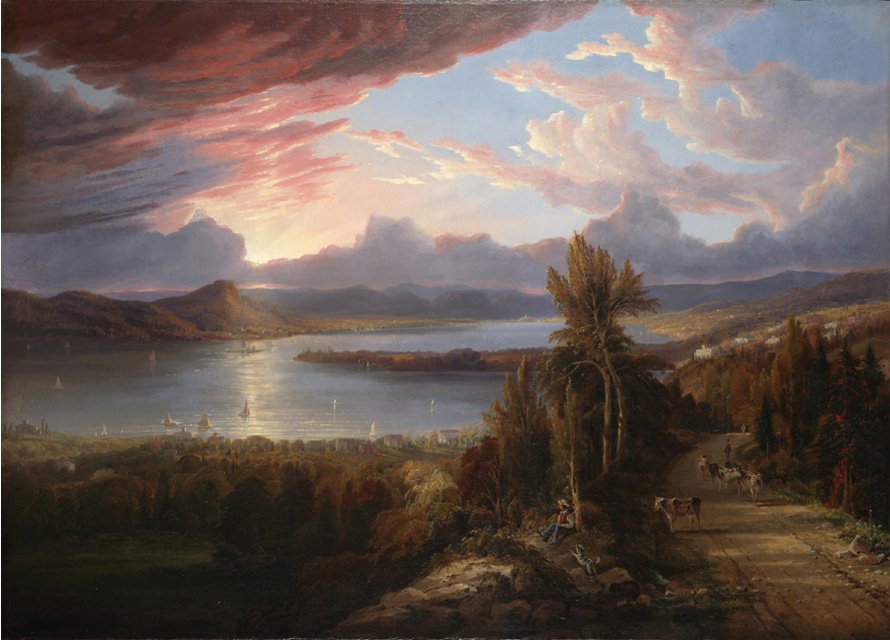
Walk down to the shoreline at George's Island Park on a low tide and look at the sand. Mixed in with the pebbles and driftwood are hundreds of small red rectangles — broken bricks, worn smooth by decades of tidal action. Some are complete enough that you can still read the maker's mark stamped into the clay. Most are just fragments. All of them came from the same place: the Gormley Brick Company factory that operated on this very shore from the mid-19th century until April 13, 1938, when the last shipment left for New York City by boat.
The bricks are the most tangible reminder that George's Island was once an industrial site. Before the trails and the picnic grounds and the boat launch, this was a mining operation — clay pulled from the ground, pressed into brick forms, fired in kilns, loaded onto barges, and shipped down the Hudson. The broken bricks on the beach are the ones that fell off the dock or shattered when they were loaded. The ones that made the trip became the walls of Sing Sing Correctional Facility, the Graymoor Friary at Garrison, and many of the Catholic institutions of the Lower Hudson Valley.
There is another thing about George's Island worth knowing right away: it is not really an island anymore. It once was — an actual tidal island that was cut off from the mainland at high water. But the industrial uses of the 19th and 20th centuries filled in the narrow channel that separated it from the shore. What you walk on today is connected to the mainland by fill dirt and brick rubble. The island is a peninsula, and it has been one for more than a century.
The Name Nobody Can Explain
Who was George?
The honest answer is that nobody really knows. The park is called George's Island, and the name appears on maps going back to the 19th century, but no specific historical figure named George has ever been documented as the island's owner, namesake, or even notable resident.
The most commonly told story — which local historians treat as probable folk etymology rather than confirmed history — is that "George" was a worker at one of the brickyards. Possibly a foreman, possibly just a well-known laborer. The story goes that the brick factory workers called the island "George's Island" because George was always working on it, and the name stuck.
That is a thin story. It lacks even a last name. But it is the best that anyone has been able to document, and it has the virtue of at least pointing toward the industrial era that actually shaped the place.
Other theories have been proposed — that the island was named for King George III (implausible, since the name appears on post-Revolutionary maps), or for George Washington (no documented connection), or for some forgotten early Dutch settler. None has any primary source support. The most truthful answer is that "George's Island" is a name passed down from some moment in the early 19th century when somebody named George was associated with the place, and the details have been lost.
The Deep History
The island — then a true island, separated from the mainland by a tidal channel — has been inhabited for millennia. Archaeological surveys have documented a substantial shell midden on the property, indicating long-term use by indigenous peoples for shellfish harvesting. Radiocarbon dating of similar middens along the Hudson has produced dates as old as 7,000 years, suggesting that people were gathering oysters and clams at George's Island not long after the last Ice Age ended and the Hudson became a tidal estuary.
The specific group most likely responsible for the midden is the Lenape/Wappinger — the same Algonquian-speaking people whose descendants became the Kitchawank, Sint Sinck, and related bands of the Lower Hudson Valley. The island would have been an ideal gathering place: accessible at low tide for fishing and clamming, easily defended at high tide, and close to the main Hudson River channel for travel.
After European contact, the Montrose area became part of the Van Cortlandt Manor, the enormous 86,000-acre patent granted to Stephanus Van Cortlandt in 1697. George's Island fell within the manor, though its small size and marginal agricultural value meant it was not a priority for the early farmers who worked the lands along the Hudson.
The hamlet of Montrose — which would give the area its modern name — takes its name from the Montross family, early tanners and land speculators who settled in the Cortlandt area in the late 18th century. Over time, "Montross" became "Montrose" in local usage, and the area east of George's Island came to bear the new name.
The Brick Era
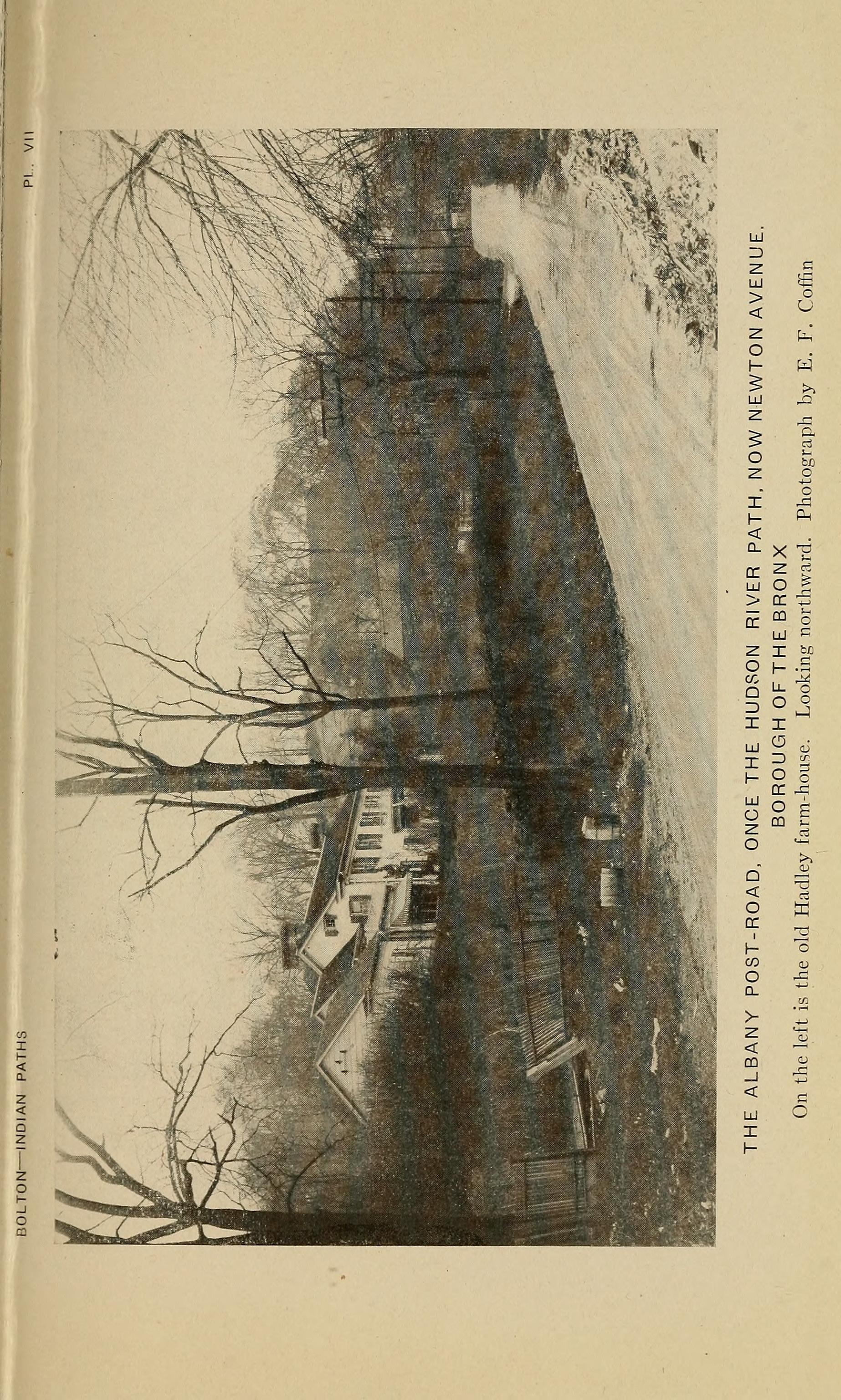
In the mid-19th century, the Hudson Valley experienced a boom in brick manufacturing. The region's clay deposits, combined with easy water transportation down the Hudson to New York City, made it economically attractive to open brickyards anywhere there was clay in the ground. George's Island, with its exposed clay banks and direct river access, was one of many Hudson Valley sites that became brick-making operations.
Gormley was not the first name on the island — the island went through several brickyard operators across more than a century. The first brickyard was established by James Wood, an English immigrant who had arrived in Westchester in 1801 at the age of 28 and who began making bricks in Sing Sing before expanding north to George's Island. The 19th-century peak was reached under Tompkins & Bellefeuille, who leased two yards on the island, and under Edward D. Bellefeuille, who ran a third. J. Thomas Scharf's 1886 History of Westchester County records the three combined operations as employing 130 men in 1884. The Bellefeuille bricks bore the maker's mark "EDB" — fragments of which still wash up on the Brick Beach along with the later Gormley bricks. F. W. Beers's 1891 Atlas of the Hudson River Valley from New York City to Troy shows Bellefeuille's 65-acre George's Island parcel explicitly labeled on the plate.
Matthew J. Gormley of Haverstraw was a relative latecomer. Born around 1902-1903, he had opened a brickyard at Haverstraw in 1895 and then expanded to George's Island, where his seven-machine operation ran from roughly 1905 to 1910. His bricks, stamped with the mark "GORMLEY," were shipped into New York City and up the Hudson to institutional customers. Although the operation was short compared with the earlier Wood and Bellefeuille years, Gormley lingered in the memory of the island because his was the last name on the bricks that were left behind when the industry collapsed.
Together, the Wood, Bellefeuille, and Gormley operations supplied brick to major institutional customers in the Hudson Valley. The most famous customer was Sing Sing Correctional Facility, the notorious prison at Ossining — the same prison town where James Wood had started out. Sing Sing's expansion and rebuilding in the late 19th and early 20th centuries required millions of bricks, and many came from the George's Island yards. Walls of one of the most famous prisons in American history were literally built from clay mined out of what is now a Westchester County park.
George's Island bricks also built the Graymoor Friary at Garrison, New York — the headquarters of the Franciscan Friars of the Atonement, a Catholic order founded in 1898. The George's Island yards supplied bricks for many of the Catholic institutions in the Hudson Valley during the period when the Church was building the physical infrastructure of its immigrant-serving parishes.
The clay mining changed the landscape of the island permanently. The rolling topography visible today in parts of the park is the ghost of old clay pits — places where the ground was dug out, deeper and deeper, until the clay ran out or the pits flooded with groundwater. The park's trails weave through this remnant topography, and visitors walking them are walking over former mines.
The Last Barge: April 13, 1938
The brickyard era came to an end during the Great Depression. Cheaper brick sources, changing construction methods, and the economic collapse of the 1930s made the Hudson Valley brick industry unsustainable. One after another, the regional brickyards closed.
According to Matthew J. Gormley's New York Times obituary (June 8, 1989), the final shipment from George's Island left on April 13, 1938, bound for customers including Sing Sing and Graymoor. It was the last commercial use of the island as an industrial site. The Gormley operation shut down, the men who worked there looked for other jobs, and the island entered a long period of quiet abandonment.
Walk the beach today and you can still find the bricks. Most are broken. Some carry partial manufacturer stamps — some read "GORMLEY," some "EDB," some are too worn to identify. They are the last physical artifacts of an industry that once employed dozens of families across three successive operators and sent millions of bricks downriver to build the city.
World War II and Federal Ownership
During World War II, the property became associated with the nearby Camp Shanks and the Montrose Veterans Affairs hospital complex, both of which occupied land in Cortlandt during the war and its aftermath. Camp Shanks was the largest U.S. Army staging camp for the European theater — more than 1.3 million soldiers shipped out from its docks on the Hudson River, most of them bound for D-Day and the liberation of Europe. The site did not directly include George's Island, but the federal government did acquire surrounding land, and George's Island appears to have fallen under federal ownership in this period.
1966: The Park
In 1966, Westchester County acquired George's Island from the federal government. The county removed the remaining industrial debris, dismantled the old piers that had served the Gormley brick barges, and began developing the property as a public park.
The final 208-acre park includes a boat launch (accommodating vessels up to 21 feet, open April through September), picnic areas, a freshwater pond, tidal wetlands, a playground, ballfields, wooded trails, and connections to the Hudson River Greenway and neighboring Montrose Point State Forest. It is one of the few public spots along the Westchester shoreline where boaters can launch directly onto the Hudson, and as a result, the boat launch is heavily used during fishing season.
What the Landscape Holds
The George's Island landscape is stranger and richer than most visitors realize. The freshwater pond in the park is partly the remnant of a flooded clay pit from the brick era. The small hills on the trails are spoil piles from 19th-century excavation. The beach that runs along the Hudson shore is littered with red fragments from the 1938 shutdown. The wooded areas conceal the footings of long-gone buildings — workers' barracks, kilns, dock structures.
And under all of it, still, is the shell midden where indigenous people gathered oysters for seven thousand years.
None of this is explained by interpretive signs. The park presents itself as a simple county recreational facility — a place for picnics and fishing and kids' birthday parties. But for anyone who knows what to look for, George's Island is a palimpsest of Hudson Valley history, each layer partially erased by the next but never completely gone.
The bricks are still there. You just have to look down.
Primary Sources (freely online): - Scharf, J. Thomas. History of Westchester County, New York, Including Morrisania, Kings Bridge, and West Farms. Two volumes, 1886. The 1884 inventory of the George's Island brickyards — Tompkins & Bellefeuille (2 yards), Edward D. Bellefeuille (1 yard), 130 men — appears in Volume II's Cortlandt chapter. Full text on Internet Archive. - *F. W. Beers, Atlas of the Hudson River Valley from New York City to Troy. 1891. Shows Bellefeuille's 65-acre George's Island parcel explicitly labeled. Digitized by the David Rumsey Map Collection (free, CC-BY-NC): https://www.davidrumsey.com/maps1120846-28206.html - Matthew J. Gormley obituary. New York Times, June 8, 1989. Primary source confirming the April 13, 1938 final shipment date and the Sing Sing + Graymoor customer list. - Brickcollecting.com — Verplanck and Montrose page: https://brickcollecting.com/verplanck.htm — photographs of GORMLEY and EDB stamped bricks recovered from the George's Island Brick Beach, with photographer credit (Gurcke).
Research Gaps / Offline-Only Sources: - Haverstraw Brick Museum (haverstrawbrickmuseum.org) holds a 1903 brickyard payroll ledger, period photographs, and a 300-brick wall display including a Gormley frog — not digitized. - George V. Hutton, The Great Hudson River Brick Industry (Purple Mountain Press, 2003) — the standard scholarly treatment of the Hudson Valley brick industry; not online. - Westchester County Archives holds the 1966 park-acquisition deeds and the Parks Department files for the conversion of George's Island from federal to county ownership. - Van Cortlandtville Historical Society and the Town of Cortlandt Historian's office hold local brickyard ephemera.
Secondary Sources:* - Westchester County Parks. "George's Island Park." parks.westchestercountyny.gov/georges-island-park - Scenes from the Trail. "George's Island Park." - Historic Hudson River Towns. "Cortlandt, NY." - River Journal Online. "Montrose Proud: A Legacy Memorable and Venerable." - Westchester Magazine. "George's Island Park." - Wikipedia. "Camp Shanks" — WWII staging camp history - "Golden Age of Hudson Valley Brickmaking" (blog post). notorc.blogspot.com/2012/02/golden-age-of-hudson-valley-brickmaking.html