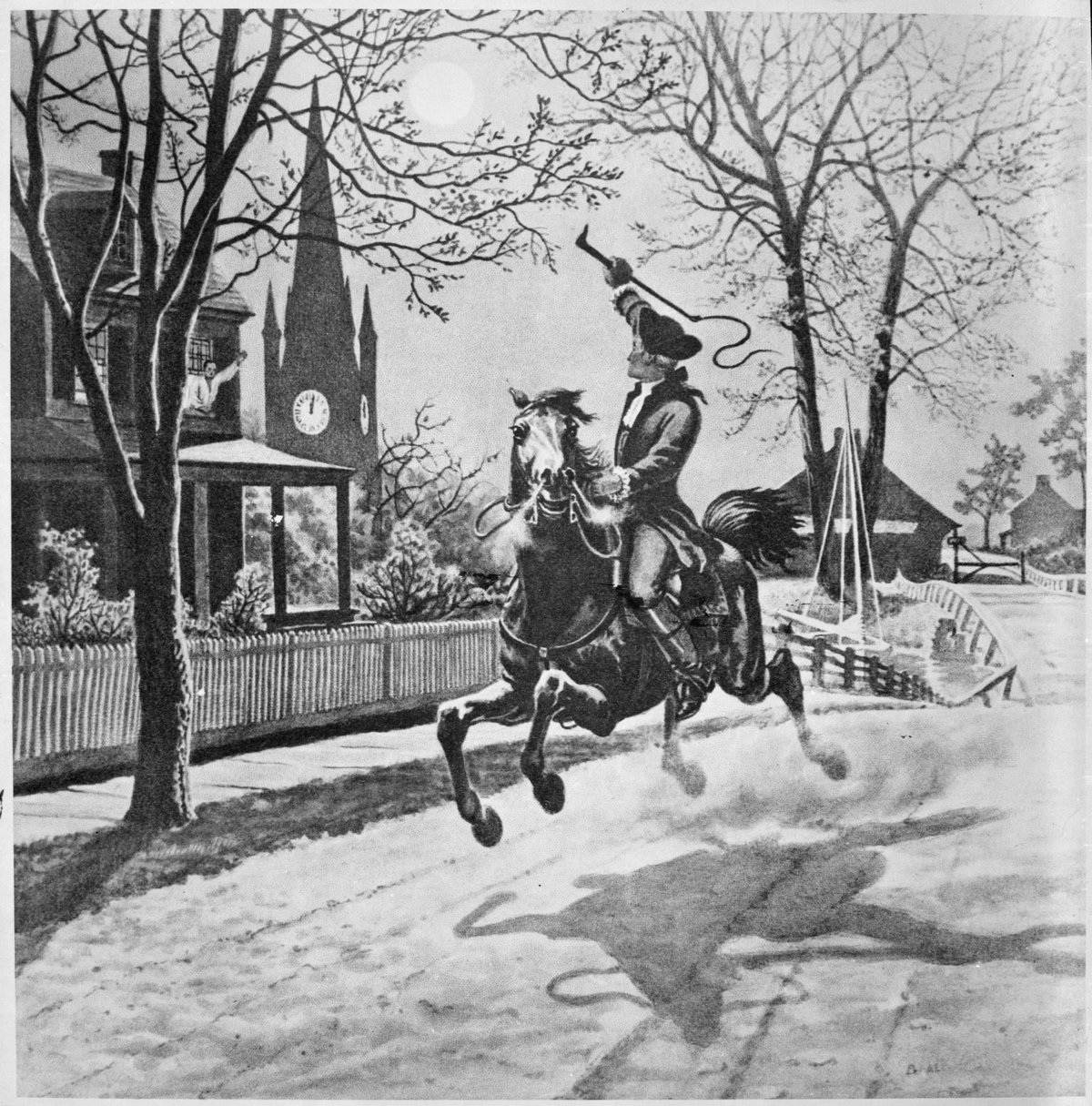
The Received Story
The story of Tim Knapp appears in most modern Westchester Revolutionary War histories as a minor anecdote. A young man steals Col. James DeLancey's horse. DeLancey offers a 100-guinea bounty. Knapp is captured, brought before DeLancey, sentenced, and hanged all in the same morning. His execution sets off a chain of retaliation: an American whaleboat captain named Fade Donaldson hangs an old Irishman named Brom Barrett "in retaliation" at Titus's Bridge. General David Waterbury orders Donaldson and his associates arrested for murder. Donaldson escapes the initial arrest but is later caught and hanged himself at White Plains for the Barrett lynching. Two American and two Loyalist deaths, all stemming from the original theft of a horse.
This is the version you will find, in compressed form, in Bolton 1848, Scharf 1886, Shonnard 1900, and in every derivative treatment since. The story is almost always told as a tragedy of summary justice — rough, but ultimately deserved by everybody involved. Tim Knapp is the starting point; his guilt is assumed.
In April 2026, as part of this history.croton.news project, we transcribed fourteen separate McDonald Interview manuscripts that preserve first-person or family-tradition testimony about the Tim Knapp case. They were conducted between August 1844 and November 1849, from witnesses in four Westchester and Fairfield County towns. Reading them together, two things become clear. First, Tim Knapp was a much more distinctive and specific individual than the published summaries allow — "young and good looking from Horseneck," "the handsomest young man I ever saw," from "a handsome family," "a great favorite with the women," "dressed particularly well." Second, and far more unsettlingly, the witnesses do not agree on whether he was guilty of the horse theft at all.
Fourteen Witnesses
These are the fourteen McDonald interviews in our corpus that preserve substantive testimony about the Tim Knapp case:
| Date | Witness | WCHS item | What they add | |---|---|---|---| | 1844-08-13 | Amelia Edwards & Andrew Corsa (joint) | [331](https://collections.westchestergov.com/digital/collection/mcdonald/id/331) | The execution procedure verbatim; names the three captors; names Lunnon | | 1844-10-26 | Zaccheus Mead & Mr. Knapp of Cos Cob | [1275](https://collections.westchestergov.com/digital/collection/mcdonald/id/1275) | A Mr. Knapp of Cos Cob gives family context | | 1845-10-18 | Mary Ann Ferris | [1146](https://collections.westchestergov.com/digital/collection/mcdonald/id/1146) | Wife of the actual thief; "the handsomest young man I ever saw" | | 1846-10-12 | Nancy Lyon Sarles | [527](https://collections.westchestergov.com/digital/collection/mcdonald/id/527) | Says Knapp "captured DeLancey's horse" | | 1847-09-23 | Amelia Edwards (solo) | [1726](https://collections.westchestergov.com/digital/collection/mcdonald/id/1726) | Additional family context | | 1847-11-01 | Isaac Holly | [1550](https://collections.westchestergov.com/digital/collection/mcdonald/id/1550) | "Cousin to the Knapps of Greenwich… from a very handsome family" | | 1847-11-06 | Amah Hobby Mead | [1198](https://collections.westchestergov.com/digital/collection/mcdonald/id/1198) | "From Horseneck near Putnam's Hill… dressed particularly well" | | 1847-11-18 | Elizabeth Moseman | [662](https://collections.westchestergov.com/digital/collection/mcdonald/id/662) | Eyewitness to the hanging itself | | 1848 | Joseph Feeks | [752](https://collections.westchestergov.com/digital/collection/mcdonald/id/752) | Says Knapp was innocent — Ferris himself said so | | 1848-10 | Jotham Carpenter | [1695](https://collections.westchestergov.com/digital/collection/mcdonald/id/1695) | Huggeford arrived too late to save Knapp | | 1848 | James Hopkins | [1685](https://collections.westchestergov.com/digital/collection/mcdonald/id/1685) | Knapp partnered with Ferris in earlier cattle raids; says Knapp WAS at the horse theft | | 1848 | Samuel Ferris | [791](https://collections.westchestergov.com/digital/collection/mcdonald/id/791) | Dates the hanging to 1781–1782 | | 1849 | Peter Husted | [1951](https://collections.westchestergov.com/digital/collection/mcdonald/id/1951) | Knapp family Horseneck context | | 1849-10-30 | David Merritt | (via Sarles) | Mentions Capt. Samuel Kipp and Gilbert Totten alongside Knapp material |
The full transcription of each interview is at [history.croton.news/mcdonald](https://history.croton.news/mcdonald).
Tim Knapp the Young Man
Before the theft, before the bounty, before the rope — Tim Knapp lived in Horseneck (now Greenwich, Connecticut) near Putnam's Hill. He was related to one of the most prominent local Knapp families. Nobody in our fourteen McDonald witnesses describes him as a hardened criminal or a professional horse thief. Every single witness who comments on his appearance describes him in the same way.
Mary Ann Ferris — the wife of Thomas Ferris, the man who actually stole DeLancey's horse — is the most precise:
<em>"Knapp was the handsomest young man I ever saw."</em>[^1]
[^1]: WCHS McDonald Interviews item 1146, Ferris Mary Ann interview of October 18, 1845. Hufeland Mss. Book 1, Vol. 2, pp. 208–211. https://collections.westchestergov.com/digital/collection/mcdonald/id/1146 . Full transcription: [history.croton.news/mcdonald/mcdonald_ferris_mary_ann](https://history.croton.news/mcdonald/mcdonald_ferris_mary_ann). Mary Ann Ferris (1760–1851) married Thomas Ferris shortly after the war.
This is a deposition taken in 1845 from a woman in her mid-80s. She is talking to McDonald about a man executed 64 years earlier — a man whose death had been the occasion for her own husband's deepest wartime guilt. She offers the assessment not as rhetoric but as memory. Knapp was the handsomest young man she had ever seen in her life.
Amah Hobby Mead (interviewed 1847) places him geographically and adds the family context:
<em>"Tim Knapp was from Horseneck near Putnam's Hill, and a very handsome young man who dressed particularly well. He belonged to a handsome family, and was a great favorite with the women, and very much lamented."</em>[^2]
[^2]: WCHS McDonald Interviews item 1198, Mead Amah Hobby interview of November 6, 1847. Hufeland Mss. Book 1, Vol. 5, pp. 1194–1197. https://collections.westchestergov.com/digital/collection/mcdonald/id/1198 . Full transcription: [history.croton.news/mcdonald/mcdonald_mead_amah_hobby](https://history.croton.news/mcdonald/mcdonald_mead_amah_hobby).
Mead is from the Horseneck community herself. Her details — "dressed particularly well," "handsome family," "great favorite with the women," "very much lamented" — are from inside the village that produced Knapp and mourned him. The "very much lamented" at the end of the line is the assessment of a whole community that did not believe the verdict had been deserved.
Isaac Holly of Greenwich (interviewed November 1, 1847) adds the genealogical connection:
<em>"Tim Knapp was cousin to the Knapp's of Greenwich, from which place he himself came. — A handsome man of a very handsome family."</em>[^3]
[^3]: WCHS McDonald Interviews item 1550, Holly Isaac interview of November 1, 1847. Hufeland Mss. Book 1, Vol. 4, pp. 576–580. https://collections.westchestergov.com/digital/collection/mcdonald/id/1550 . Full transcription: [history.croton.news/mcdonald/mcdonald_holly_isaac](https://history.croton.news/mcdonald/mcdonald_holly_isaac).
Amelia Edwards, who witnessed the execution itself, gives the last piece of the physical description in her 1844 interview with Andrew Corsa:
<em>"Knapp was young and good looking from Horseneck."</em>[^4]
[^4]: WCHS McDonald Interviews item 331, Edwards Amelia and Corsa Andrew joint interview of August 13, 1844. Hufeland Mss. Book 1, Vol. 1, pp. 106–112. https://collections.westchestergov.com/digital/collection/mcdonald/id/331 . Full transcription: [history.croton.news/mcdonald/mcdonald_edwards_amelia_and_corsa_andrew](https://history.croton.news/mcdonald/mcdonald_edwards_amelia_and_corsa_andrew).
Four witnesses, independent of one another, writing in 1844, 1845, 1847, and 1847. All four use the same word: handsome. Knapp was the local beauty of Horseneck — the man the women of the village talked about, the young man who carried the Knapp family name in the neighborhood, the young man who dressed above the ordinary even in wartime. He was "very much lamented" because he was the kind of man a community grieves.
The Theft of Goliah
The horse at the center of the story has a name: Goliah. The WCHS digital catalog description for Mary Ann Ferris's interview identifies it directly: "Thomas Ferris was involved in the theft of Loyalist Colonel James DeLancey's horse Goliah."[^1]
The best first-person account of how the theft actually happened comes from Joseph Feeks, interviewed November 1, 1848, who in turn is telling what Thomas Ferris (Mary Ann's husband and one of the actual thieves) had told him after the war:[^5]
<em>"Tom Ferris, Wright Carpenter and Ben [Bow]. Green went down for DeLancey's horses. They were at pasture in a meadow surrounded by briers, witch hazel &c. They waited all day long… for shelter, and the horse and mare came up to them as straight as if led. Ferris and Carpenter mounted the horse and Green the mare. They went prepared with bridles, and rode full speed for Williams' bridge. Here, as they began to descend a hill they [were seen and pursued]… One or two miles from Williams Bridge is a hollow near V. Briggs's. Ferris said: 'Now, boys, I'm to leave you — the horse never'll carry two.' He then jumped off right among the briers and hauled them about him. It was a bright moon shining night, almost as light as day. A few moments after he had concealed himself his pursuers passed at full speed. Ferris then proceeded home on foot, and found the horse and mare both at Carpenters who then lived opposite the blacksmiths shop by Samuel Smith's Tavern."</em>
[^5]: WCHS McDonald Interviews item 752, Feeks Joseph interview of November 1, 1848. Hufeland Mss. Book 1, Vol. 5, pp. 748–754. https://collections.westchestergov.com/digital/collection/mcdonald/id/752 . Full transcription: [history.croton.news/mcdonald/mcdonald_feeks_joseph](https://history.croton.news/mcdonald/mcdonald_feeks_joseph). Feeks is explicit that he is reporting what Ferris himself said after the war.
Three men, not four: 1. Thomas Ferris — who later escaped alone into a briar patch on foot when the pursuit got too close for two men on one horse 2. Wright Carpenter — from the neighborhood of Samuel Smith's Tavern (now Armonk, NY), who rode the stallion 3. Benjamin Green — "Ben Bow Green," who rode the mare
And, critically, not Tim Knapp. Feeks's account is explicit:
<em>"Tim Knapp was not along with the three that took off those horses although he might have given information about them. I have heard Ferris say he, (Tim Knapp) was innocent and hanged without Judge or Jury."</em>[^5]
Joseph Feeks was an old man in 1848 and he is reporting a line he had heard "many times" from Thomas Ferris personally, after the war. Ferris — the man who climbed into the briar patch, who cut his face on the thorns, who rode Goliah full speed from Morrisania to Williams' Bridge in the moonlight — always maintained, long after the war was over, that Tim Knapp was innocent of the theft and had been "hanged without Judge or Jury."
This is the single most authoritative witness in the entire primary-source record. Ferris was there. Ferris was the one who would know. Ferris's post-war verdict was that DeLancey's 9 a.m.-to-noon tribunal had executed the wrong man.
The Counter-Witnesses
Four McDonald witnesses place Knapp at the theft — or at least assert he participated in it.
James Hopkins of North Castle, interviewed November 10, 1848, disagrees directly with Feeks on the identity of the third man:[^6]
<em>"I still think that Colonel Benjamin Green was not at the capture of DeLancey's horses, but that Tim Knapp was. It was sometime afterwards that they hanged Tim Knapp — I think the next season — perhaps the next Spring."</em>
[^6]: WCHS McDonald Interviews item 1685, Hopkins James interview of November 10, 1848. Hufeland Mss. Book 1, Vol. 6, pp. 808–827. https://collections.westchestergov.com/digital/collection/mcdonald/id/1685 . Full transcription: [history.croton.news/mcdonald/mcdonald_hopkins_james](https://history.croton.news/mcdonald/mcdonald_hopkins_james).
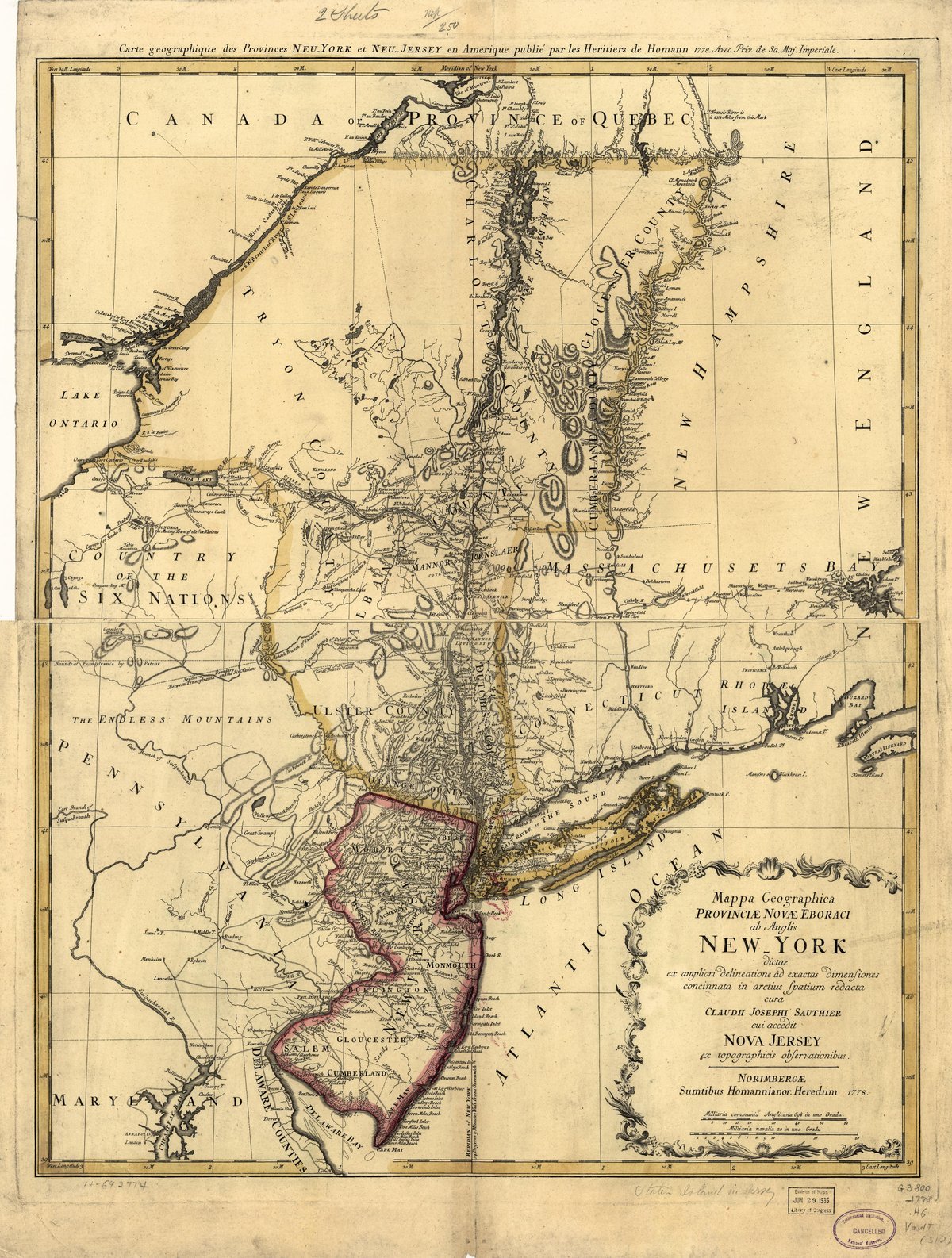
Hopkins inverts Feeks's list: he says Benjamin Green was not there, and Tim Knapp was. His "I still think" is the language of a man who has thought about the question — perhaps argued about it with neighbors — and stuck with his conclusion. Hopkins is not reporting Ferris's words; he is stating his own best guess 67 years later.
Nancy Lyon Sarles of Bedford (interviewed October 12, 1846) gives the most definite assertion in a fragment of her interview that has survived in mid-sentence:[^7]
<em>"[Knapp was not] taken till the Spring after he captured DeLancey's horse."</em>
[^7]: WCHS McDonald Interviews item 527, Sarles Nancy interview of October 12, 1846. Hufeland Mss. Book 1, Vol. 3, pp. 437–440. https://collections.westchestergov.com/digital/collection/mcdonald/id/527 . Full transcription: [history.croton.news/mcdonald/mcdonald_sarles_nancy](https://history.croton.news/mcdonald/mcdonald_sarles_nancy).
Sarles speaks of the theft as Knapp's own act — "after he captured DeLancey's horse." The phrase assumes his guilt without defending it. Sarles is the daughter of Israel Lyon, a Bedford Whig, and her family tradition about Knapp goes back to her teenage years in the war.
Amelia Edwards and Andrew Corsa, in their 1844 joint interview, do not explicitly state that Knapp was the thief — but the entire execution narrative they preserve assumes it. The margin of their manuscript page, written by WCHS archivist John English decades later, reads: "[Tim Knapp had deserted from him as well as stolen his horse]."[^4] The margin note is an editorial assertion, not a witness's quotation — English is recording what he believes to be the consensus tradition about Knapp's crimes. "Deserted from him" implies Knapp had previously been one of DeLancey's own Refugees, then left the Refugee service for the American side, then stolen Goliah. Under this reading, Knapp was twice a traitor — which is the only way the three-hour execution procedure makes sense as a deliberate act of DeLancey's.
The desertion claim is not in any witness's direct quotation we have found. It exists only in English's editorial gloss. But it is the kind of detail that, if true, would explain why the whole Morrisania command treated the case as closed before Knapp arrived.
Knapp and Ferris as Partners
One of the most telling pieces of testimony in the whole dossier is James Hopkins's separate account of an earlier incident in which Ferris and Knapp appear together as partners in a cattle raid on the border of West Chester and East Chester. The incident has nothing to do with the DeLancey horse theft directly, but it establishes that Ferris and Knapp were working together, late at night, stealing Loyalist cattle for profit, and not getting along with each other in the field.
Hopkins's account (WCHS 1685):[^6]
<em>"Tom Ferris and Tim Knapp went below and secured a drove of cattle at West and East Chester from the Tories, but on returning at night near where John Tradwell (below where Mr. Bates (?)) lived they encountered a party of ten or twelve cowboys who had been above and were now on their way back also with a drove of cattle. The hostile parties were ignorant of each other's strength. It was dark and the cattle became intermixed and the drivers were mutually afraid of each other. Each party sprang over the fence opposite each other. Ferris and Knapp fired several times, then ran round a [Knoll] for cover, loaded and fired again."</em>
Ferris and Knapp are side by side in a night engagement with 10–12 Cowboys, firing muskets across a fence in the dark. After a while Ferris creeps forward to the fence and drives off a cow and a pair of oxen. He then attempts a second capture, hears the rails of the fence crack under another man's feet, spots a Cowboy rising behind a fence, and shoots the man dead at close range. Here is Hopkins's next sentence:
<em>"Tim Knapp left him just before he shot the man and he refused afterwards to let Tim share in his profits."</em>
Knapp left Ferris just before Ferris killed the Cowboy. Knapp did not want to be at the scene of the killing. Ferris, angered by Knapp's cowardice (or his principled refusal to participate in a murder-capable raid), refused afterward to let Knapp share in the cow and oxen he had recovered. The relationship between Ferris and Knapp is now explicitly transactional, uneasy, and broken over a moral dispute.
This matters because it establishes two things: 1. Knapp was sometimes Ferris's partner in rustling operations against Loyalist livestock on the Bronx / Westchester border. Feeks's "he might have given information about them" is not inventing a connection out of thin air. 2. Knapp was willing to walk away from a raid when violence was about to happen. His departure from the Cowboy engagement — "just before he shot the man" — is the kind of conscientious behaviour that fits with Ferris's post-war defense of his character. Knapp was a horse-thief's sometime partner, but not a murderer and not a man who enjoyed killing.
Under the Hopkins account, Knapp was close enough to the horse-theft operation to be plausibly implicated (he was Ferris's former associate), but distant enough from it on the actual night of the theft that Ferris himself could later say he was innocent. Both Feeks's claim that Knapp was innocent and Hopkins's claim that Knapp was at the capture can be read charitably: Knapp may have been near the operation without being in the stable; he may have given information about where the horses were without having taken them; he may have been in the company of Ferris, Wright Carpenter, and Ben Green earlier in the evening without being one of the three who actually led Goliah out.
The standard published story reduces all of this to "Tim Knapp stole DeLancey's horse." The primary-source record is much messier.
The Morning of the Execution
The most detailed single account of the execution procedure comes from the Amelia Edwards and Andrew Corsa joint interview of August 13, 1844. Edwards lived in the southwest Bronx County area near Theophilus Hunt's farm and was a near-daily observer of DeLancey's Morrisania headquarters during the war. She was old enough in 1781 to remember the details with precision. Her account:[^4]
<em>"When DeLancey's horse was taken he offered one hundred guineas to any one who would bring in the thief. Tim Knapp was captured by Robert Emery and Nathaniel Taylor and Charles Merritt who brought him in. At 9. a.m. DeLancey came to Head Quarters according to custom — walked two or three times across the floor, looked very black and exclaimed: 'Tim Knapp, prepare to die (meet death?) You shall be hung before 12 oclock, by the living God!' Knapp was young and good looking from Horseneck. He was first taken to Theophs. Hunts barn, but that (the frame of that) was double girted and consequently unfit. They then took him to Thomas Leggett's, on the Gore Lot Farm, north of the village of West Farms. Theophilus Hunt pitying so young and handsome a man &c, intended to intercede &c, but when the hour of execution came DeLancey drew his sword, and swore by G-d, he would cut off the first damned rascal's head that dared to intercede. A black man (Lunnon), a fidler, was the executioner, and received Knapp's suit of clothes which was very fine as compensation."</em>
Edwards's testimony — 63 years after the event — gives us a sequence of specific detail that no published history has preserved:
1. The bounty: 100 guineas, offered by DeLancey personally to anyone who would bring in the thief. 2. The three captors: Robert Emery, Nathaniel Taylor, and Charles Merritt. These three men — their names preserved only in Edwards's interview — split the bounty between them. None is named in any other primary source we have located. 3. The 9 a.m. arrival: DeLancey came to Headquarters "according to custom" — meaning this was his normal morning routine. He did not convene a special tribunal; he simply incorporated Knapp's execution into his normal command-tent schedule. 4. The physical detail: DeLancey walked "two or three times across the floor," looked "very black" (angry, in period usage), and then delivered the sentence directly to Knapp's face. 5. The sentence: "Tim Knapp, prepare to die. You shall be hung before 12 oclock, by the living God!" The religious oath — "by the living God" — is a command-tent pronouncement on a moving timetable. Three hours from sentence to execution. 6. The first barn failed: The scaffold party took Knapp to Theophilus Hunt's barn, but the barn was "double girted" — meaning the structural timbers were doubled up in a way that interfered with hanging a rope from the main beam. The barn was physically unsuitable as a gallows. 7. The second barn: They moved to Thomas Leggett's barn on the Gore Lot Farm, north of the village of West Farms. This became the scaffold. 8. The attempted intercession: Theophilus Hunt, an elderly DeLancey family friend, "pitied so young and handsome a man" and "intended to intercede" — meaning he was about to walk up to DeLancey and plead for a stay of execution. Hunt was in his late sixties or seventies and a personal friend of DeLancey from their childhoods together. 9. DeLancey's sword: When the hour of execution came and Hunt began to approach, DeLancey physically drew his sword and "swore by G-d, he would cut off the first damned rascal's head that dared to intercede." The threat was to anyone, including Hunt. Intercession was not allowed. 10. Lunnon: An enslaved Black fiddler named Lunnon was the executioner. He placed the rope around Knapp's neck and carried out the hanging. His payment was Knapp's suit of clothes — which Edwards describes as "very fine." The executioner's fee was not money but the dead man's wardrobe.
Three hours. No trial. No defense counsel. No witnesses summoned. No character testimony. No appeal. A commanding officer's field pronouncement, a private-property barn, an enslaved fiddler with a rope, and a fine suit of clothes for wages.
Huggeford Arrived Too Late
Jotham Carpenter of North Castle, interviewed on October 30, 1848, preserves a detail the other witnesses do not. Major Thomas Huggeford of DeLancey's Refugees — a field officer who was, by one of the more remarkable facts in the whole Neutral Ground record, born in Horseneck on King Street just like Tim Knapp himself, and who later became a Quaker and expressed deathbed regret for his wartime service — was away from Morrisania the morning Knapp was captured and brought in. That Huggeford and Knapp came from the same small Connecticut village on the same street explains why, in Carpenter's account, Huggeford personally rushed back to Morrisania as soon as word reached him of the capture. He was not trying to save a stranger. He was trying to save a neighbor.
The biographical detail comes from Daniel Halsted and Harriet Hunt Halsted of Harrison, interviewed jointly by McDonald on December 4, 1848 (WCHS item 809). Daniel's wife Charity was Huggeford's own niece, so he spoke of the man as family:[^halsted]
<em>"He was born in Horseneck (Connecticut) on King St, a little below the village of Glenville, and just east of the State lines… He was inclined to Quakerism in the latter part of his life. At his death bed he grieved very much to think of having been engaged in the war and of many things he had done… Isaac Webbers and a party of Skinners came to his house to get a large sum of money which had just been paid him. He refused to give up the money, and they thereupon took him to Hatfield's at White Plains, where they abused and kicked him under the kitchen table to which they tied and secured him. In the night he managed to get loose and escaped by the window taking part of the sash with him on his head. He then went below and joined the British."</em>
[^halsted]: WCHS McDonald Interviews item 809, Halsted Daniel and Halsted Harriet Hunt, joint interview of December 4, 1848. Full transcription: [history.croton.news/mcdonald/mcdonald_halsted_daniel_and_harriet_hunt_809](https://history.croton.news/mcdonald/mcdonald_halsted_daniel_and_harriet_hunt_809). This interview is also the primary source for [Story 20, original research entry 29](/story/20_original_research#29), which frames Huggeford's defection through Skinner torture rather than political ideology.
The Halsted interview reframes Huggeford's entire arc. He was not a gentry Loyalist by conviction — he was a Horseneck farmer who had just been paid a large sum of money, had the money demanded at gunpoint by Skinners under Isaac Webbers, refused to give it up, was tied and kicked under the kitchen table of Col. Isaac Hatfield in White Plains, and escaped in the night through a window so violently that he came through carrying part of the sash around his neck. Then he went "below" — to the British side — and took a commission as a Refugee officer. The Knapp case sits inside this origin. When Huggeford heard that another Horseneck King Street man had been captured and was about to be hanged by DeLancey, he dropped what he was doing and rode for Morrisania. He was trying to save the case he himself represented: a Horseneck man who had been taken by bad luck into the wrong side of the Neutral Ground war. Carpenter's account:[^8]
<em>"When Tim Knapp was hung Major Huggerford was absent. On hearing of Knapp's being brought in he hastened home, but arrived too late to save him. He was very much put out at his death."</em>
[^8]: WCHS McDonald Interviews item 1695, Carpenter Jotham interview of October 30, 1848. Hufeland Mss. Book 1, Vol. 5, pp. 1691–1699. https://collections.westchestergov.com/digital/collection/mcdonald/id/1695 . Full transcription: [history.croton.news/mcdonald/mcdonald_carpenter_jotham](https://history.croton.news/mcdonald/mcdonald_carpenter_jotham).
Three new elements: - Huggeford was not at Morrisania when Knapp was brought in. Where he was is not specified — probably on an operational detail somewhere in the mid-Westchester borderlands. - Huggeford "hastened home" as soon as he heard Knapp had been captured. The implication is that Huggeford either knew Knapp personally or had strong views about the propriety of the planned execution. - Huggeford "was very much put out at his death." Put out is period usage for personally distressed, morally offended. Huggeford did not approve.
Carpenter also records the long aftermath of Huggeford's association with the Knapp case:
<em>"When Major Huggeford returned after the war, the sons of Fade Donaldson swore vengeance against him, and for long the major went about armed."</em>
Fade Donaldson was the American whaleboat captain who lynched Brom Barrett in retaliation for Knapp's execution. Donaldson was later hanged at White Plains for the Barrett lynching. His sons held Huggeford somehow responsible for the whole chain of deaths — apparently because Huggeford was a Refugee officer involved in the Knapp case, even though he had actually arrived too late to prevent the execution. For a long period after the war, Donaldson's sons' grudge was severe enough that Huggeford — who had by then converted to Quakerism — had to go about armed.
The Retaliation Chain
Tim Knapp's execution was not an isolated incident. It kicked off a chain of killings that the McDonald interviews track in detail:
- Knapp hanged at Thomas Leggett's barn by Lunnon, under DeLancey's direct order, at approximately 12 noon in the spring of 1781 or 1782. Huggeford arrives too late. Theophilus Hunt's attempted intercession is blocked at sword's point. - Brom (Abraham) Barrett is hanged in retaliation sometime afterward at Titus's Bridge in Stamford by Captain Samuel Lockwood, Fade Donaldson, and others. See Original Research entry 28 for the Barrett lynching detail. - General David Waterbury, the Connecticut Continental commander, orders the Barrett lynchers arrested for murder. Donaldson and most of the others escape the initial warrant. - Fade Donaldson is later captured and hanged at White Plains for the Barrett lynching. - Huggeford returns to Westchester after the war, converts to Quakerism, and goes about armed for years because Donaldson's sons have sworn vengeance on him for the whole chain. - Huggeford's deathbed apology and Quaker conversion (Halsted 809, also in [Story 20 entry #29](/story/20_original_research#29)), along with Bearmore's 600-man Twitching's Corner death march in which Huggeford rode alongside Bearmore (see [Story 25, Bearmore](/story/25_bearmore)), are all rooted in this same Neutral Ground cycle of atrocity and retaliation.
Five named men die or suffer directly. Two lynchings and one legal hanging. The cycle begins with one three-hour execution in a barn in Westchester County.
Was Knapp Innocent?
The primary sources will bear the following:
- Knapp was young and handsome. Four independent witnesses agree: Mary Ann Ferris, Amah Hobby Mead, Isaac Holly, Amelia Edwards. The Horseneck community "very much lamented" him as one of their own. He was "the handsomest young man" Mary Ann Ferris "ever saw." This is not in dispute. - Knapp had been associated with Ferris in earlier cattle-rustling operations. James Hopkins's separate cattle-raid story places them together in the field, firing muskets at Cowboys in the dark, with Knapp leaving "just before" Ferris killed a man. The association was real. - Thomas Ferris himself always said Knapp was innocent of the Goliah theft. Joseph Feeks quotes Ferris directly: "Tim Knapp was not along with the three that took off those horses although he might have given information about them. I have heard Ferris say he, (Tim Knapp) was innocent and hanged without Judge or Jury." The "many times" language is not in our transcription, but Feeks is reporting a phrase Ferris used repeatedly, as a settled conviction, after the war. - Two other witnesses (Hopkins, Sarles) contradict Ferris. Hopkins says Knapp was at the capture. Sarles says Knapp captured the horse. Neither is a first-hand account; Hopkins is reasoning from his own recollection, and Sarles is giving a Bedford family tradition. - A margin note added by the WCHS scribe John English claims Knapp had "deserted from [DeLancey] as well as stolen his horse." This is an editorial claim, not a witness quotation. If true, it would make Knapp a former DeLancey Refugee who had turned to the American side — a traitor twice over in DeLancey's eyes, and a candidate for the summary field execution he received. We have not found any primary source that corroborates the desertion claim. - Major Huggeford "was very much put out" at the death. Huggeford, a senior Refugee officer, rushed back from an operational detail to prevent the execution. He arrived too late. The fact that a Loyalist major of field rank thought the execution was wrong — and said so — suggests the case was not as simple as the bounty-and-rope procedure implied.
What the primary sources cannot settle:
- Whether Knapp was physically present at the theft of Goliah (Feeks says no; Hopkins says yes). - Whether Knapp had provided intelligence to Ferris about where the horses were pastured (Feeks allows this possibility). - Whether the "desertion" claim in the margin note is based on a lost witness account or is John English's editorial speculation. - Whether the three captors (Emery, Taylor, Merritt) specifically targeted Knapp because (a) he was known as Ferris's partner and easier to catch than Ferris himself, (b) he had been named under duress by someone else, or (c) they had independent knowledge of his involvement.
Our reading — marked explicitly as a reading, not a finding — is that Ferris's long-maintained post-war testimony is the best primary source we have. Ferris had every reason to lie the other way after the war: to let Knapp stay guilty and let his own involvement recede into the Westchester fog. Instead, Ferris went on repeating, in specific words, that Knapp had not been at the theft and had been "hanged without Judge or Jury." This is the kind of statement that costs a witness nothing to make and has no benefit — except the lifelong moral weight of telling the truth about the friend whose death you were not able to prevent.
The margin note's "deserted from him as well as stolen his horse" may be accurate, but it is not primary-source testimony. It was added by a 20th-century WCHS archivist working from the Hufeland index. It deserves to be preserved because it documents the tradition the archivist found, but it should not outweigh Ferris's direct recorded words.
The best current conclusion we can support from the primary-source record is this: Tim Knapp was almost certainly not one of the three men who physically stole DeLancey's horse Goliah, but he was plausibly known to have information about where the horse was pastured, and his prior association with Thomas Ferris and Wright Carpenter in cattle-rustling operations made him an obvious target for the three captors who were after DeLancey's 100-guinea bounty. Ferris — who was there — always said Knapp was innocent. The 3-hour execution procedure at Thomas Leggett's barn was a field-expedient lynching dressed up as a court-martial.
Coda
One of the people who had to keep going after the war, for another sixty years, was Mary Ann Ferris. She was the wife of Thomas Ferris — the horse thief who had left Knapp standing in the dark when the Cowboys came up, who had climbed into the briars on Williams' Bridge with Goliah's bridle still hot in his hand, who had always maintained afterward that Knapp was innocent. Mary Ann Ferris lived until 1851. She gave her interview to John M. McDonald in October 1845 at the age of 85. Her contribution to the whole recorded history of the Tim Knapp case is a single sentence — seven words long — placed in her interview in the pause between her husband's escape and his later exploits on Throgs Neck.
<em>"Knapp was the handsomest young man I ever saw."</em>
Sixty-four years after she had last seen him. Sixty-four years after her husband had come home from Williams' Bridge with the stolen horse and without him. Sixty-four years after the 9 a.m. summons at Morrisania, the 12 noon rope at Thomas Leggett's barn, Theophilus Hunt's sword-blocked intercession, Lunnon the fiddler taking the fine suit of clothes as payment for hanging a boy from Horseneck whose name was Tim Knapp.
The handsomest young man she ever saw.
Sources
All 14 McDonald Interview transcriptions used in this article are accessible at [history.croton.news/mcdonald](https://history.croton.news/mcdonald). The WCHS digital manuscript pages are at the URLs in the footnotes above.
The 14 Primary Witnesses
1. Edwards, Amelia and Corsa, Andrew (joint). WCHS item 331. Interview of August 13, 1844. The execution procedure, the three captors, Lunnon the fiddler, Theophilus Hunt's intercession attempt, DeLancey's sword. https://collections.westchestergov.com/digital/collection/mcdonald/id/331 2. Mead, Zaccheus and Knapp, Mr. (joint). WCHS item 1275. October 26, 1844. https://collections.westchestergov.com/digital/collection/mcdonald/id/1275 3. Ferris, Mary Ann. WCHS item 1146. October 18, 1845. "The handsomest young man I ever saw." https://collections.westchestergov.com/digital/collection/mcdonald/id/1146 4. Sarles, Nancy Lyon. WCHS item 527. October 12, 1846. Asserts Knapp captured the horse. https://collections.westchestergov.com/digital/collection/mcdonald/id/527 5. Edwards, Amelia (solo). WCHS item 1726. September 23, 1847. Additional family context; primary for the Phoebe Turner atrocity (see Original Research entry 18). https://collections.westchestergov.com/digital/collection/mcdonald/id/1726 6. Holly, Isaac. WCHS item 1550. November 1, 1847. "Cousin to the Knapp's of Greenwich." https://collections.westchestergov.com/digital/collection/mcdonald/id/1550 7. Mead, Amah Hobby. WCHS item 1198. November 6, 1847. "From Horseneck near Putnam's Hill… very much lamented." https://collections.westchestergov.com/digital/collection/mcdonald/id/1198 8. Moseman, Elizabeth. WCHS item 662. November 18, 1847. Eyewitness to the hanging. https://collections.westchestergov.com/digital/collection/mcdonald/id/662 9. Feeks, Joseph. WCHS item 752. November 1, 1848. The innocence claim. Ferris directly quoted. https://collections.westchestergov.com/digital/collection/mcdonald/id/752 10. Carpenter, Jotham. WCHS item 1695. October 30, 1848. Huggeford arrived too late; Donaldson's sons' grudge. https://collections.westchestergov.com/digital/collection/mcdonald/id/1695 11. Hopkins, James. WCHS item 1685. November 10, 1848. The earlier Ferris-Knapp cattle raid; Knapp leaving before Ferris killed a Cowboy; the counter-claim that Knapp was at the horse theft. https://collections.westchestergov.com/digital/collection/mcdonald/id/1685 12. Ferris, Samuel. WCHS item 791. 1848. Dates the hanging to 1781–1782. https://collections.westchestergov.com/digital/collection/mcdonald/id/791 13. Husted, Peter. WCHS item 1951. November 17, 1849. Horseneck Knapp family context. https://collections.westchestergov.com/digital/collection/mcdonald/id/1951 14. Merritt, David (brief mention via the Sarles interview notes). WCHS item (via 527). Contextual.
Supporting references
- Entry 19 of the [Original Research & Corrections to the Record](/story/20_original_research) page covers Lunnon, the enslaved fiddler executioner, and the three-hour execution timing. - Entry 28 of the same page covers the Brom Barrett retaliation lynching by Lockwood and Donaldson at Titus's Bridge, and Waterbury's subsequent arrest order. - Entry 36 covers the Feeks-Ferris innocence claim in summary form; this article is its full context. - *Story 25, ["Boys, I'm Wounded"](/story/25_bearmore), places Thomas Huggeford on Mansfield Bearmore's 600-man November 1780 march toward Pines Bridge — the march that ended in Bearmore's mortal wounding at Twitching's Corner (Hobby: "Huggeford, too, I think was along"). - Story 20, [Original Research](/story/20_original_research#29) entry 29, documents Huggeford's postwar conversion to Quakerism, his deathbed grief "to think of having been engaged in the war and of many things he had done,"* and the Skinner-torture origin of his defection to the British side (Halsted 809).
A note on method
All quoted passages are drawn verbatim from the WCHS McDonald Interviews manuscript transcriptions produced for this project in April 2026 using Google's Gemini 2.5 Pro vision model. Each quotation has been manually verified against the page facsimile. Where the manuscript is ambiguous (for example, Sarles's interview survives in a mid-sentence fragment), we have preserved the ambiguity in the text rather than reconstructing a smoother reading. Inter-witness contradictions — Feeks vs. Hopkins, the margin note vs. Ferris's direct words — are preserved rather than resolved. We think the primary-source record is more honest when its internal contradictions are visible than when they are edited out.
We are indebted to the Westchester County Historical Society and the Westchester County Archives for the April 2025 digitization of the McDonald Interviews collection, without which none of this reconstruction would have been possible.